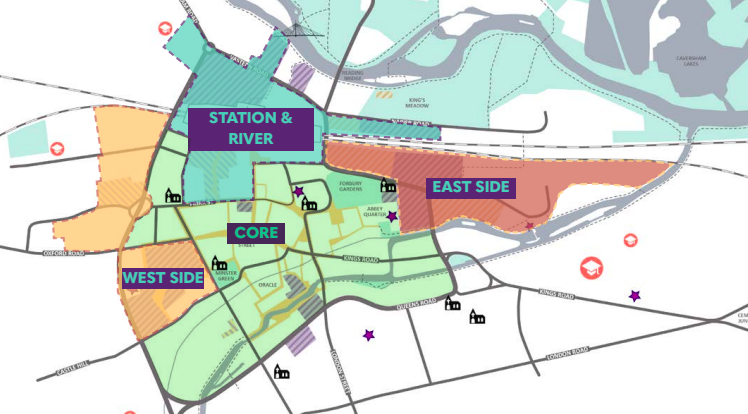
I’ve had a few messages asking why no articles lately. In truth, many of the major regeneration schemes are on the back-burner at present limiting my content, so I’ve written something of a lament on the state of affairs. But in fairness, a few things have moved forward, and the council issued a new town centre strategy a couple of months back, so let’s be positive and lead with that even if it’s old news (it was barely covered). They published two new documents: a vision and high level plan. There’s some positive ideas and intent there, let’s take a look… But first you’ll have to endure that lament…
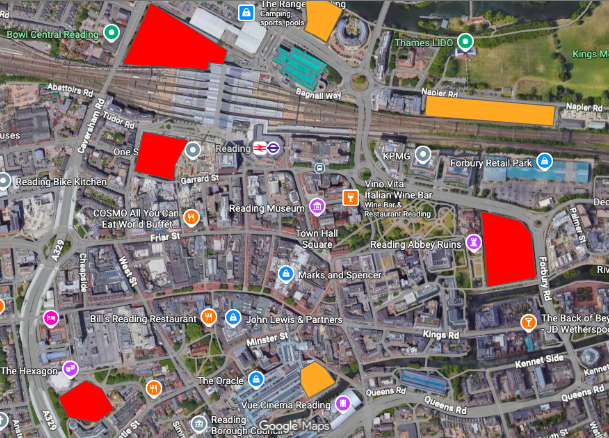
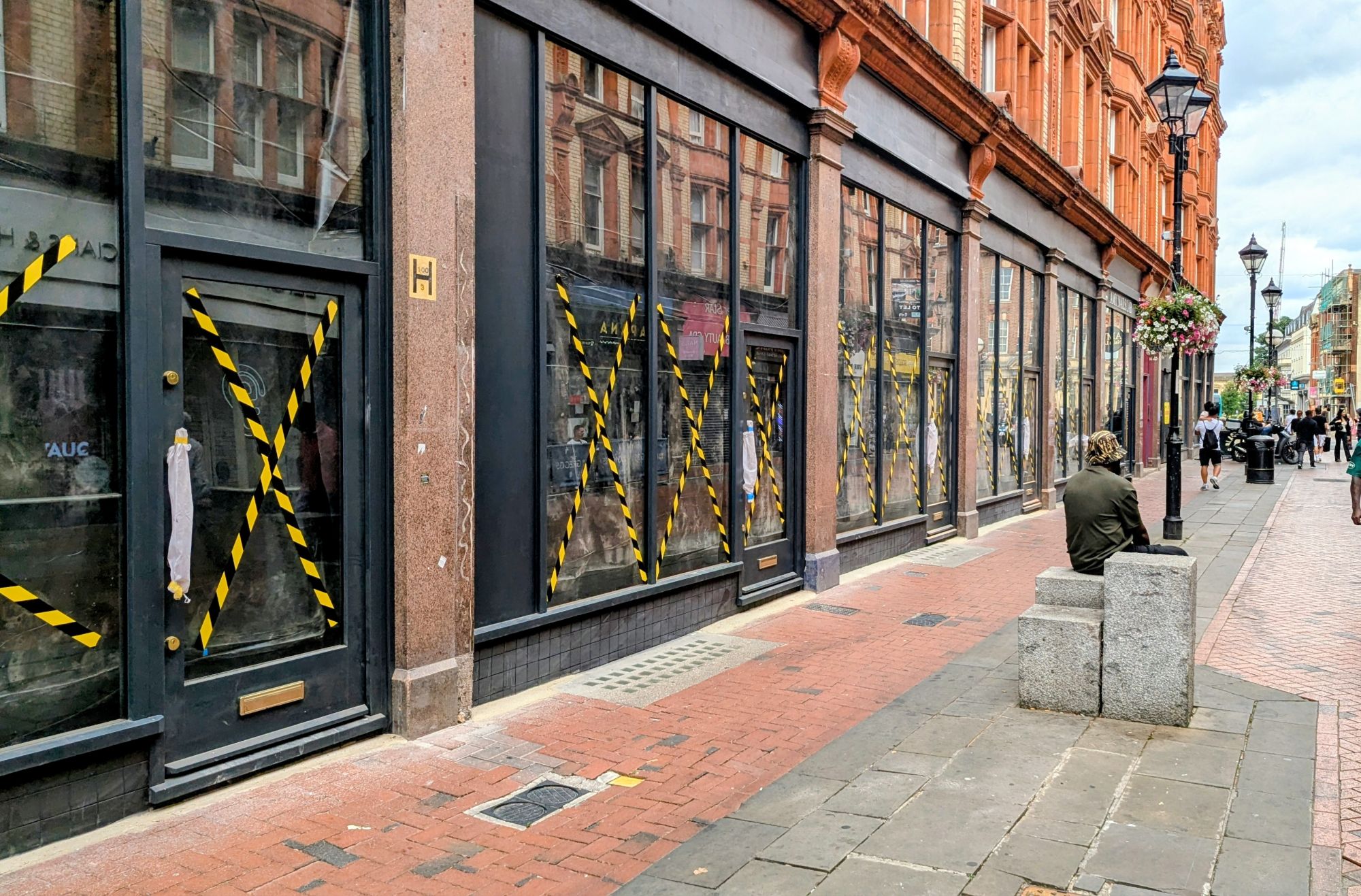
The coloured-in map above isn’t one from the council’s documents: it’s one I created. I started this website in 2015, and the areas in red were already derelict by that time and yet still stand idle today, making no economic, social or cultural contribution to the town. That is a large swathe of the town centre out of commission on a generational basis. And I haven’t even attempted to classify the Cattle Market, or fiddle around with the smaller sites like The Lower Ship. The red zones are 10+ years out of use, the ambers 3 or more.
A very quick run through of the troubled sites…
The Gaol – closed in 2013 and is now owned by Ziran Education Foundation. They’ve got as far as building a website, but no further. And the website is just gibberish:
When the dream of redemption becomes a shackle of imprisonment, The bound soul still finds strength on the path to awakening. This is the spiritual essence that Reading Gaol offers our fragmented age. The Ziran Education Foundation, under the theme “Awakening Sacred Ground”, now invites planning and design institutions worldwide to join THE RECENTRE to reimagine Reading Gaol into a symbol of a new global cultural compass. READING MYSELF. RECENTRE MYSELF.
Let it be a space where awakened souls guided by the wisdom of Zero Point Energy, and where, amidst a broken reality, each of us may begin the journey to awaken a whole and integrity self.
No architects. No designs. No plans. Surely by now there should be a constant stream of news of fund-raising, applying for arts or heritage grants, appealing for donations… What was the point of buying the place? The only thing giving off “Zero Point Energy” is Ziran themselves. I can understand why the council has tried to be nice and engage with the owner – only recently expressing hope following another vague high level engagement – but surely patience must run out soon.
The Caversham Road sorting office was vacated in 2009. Other than as a site office during the station rebuild, it has sat idle. And now the huge glazed station footbridge offers a continuous reminder of the ongoing waste of the most accessible vacant development plot in the South. I have no idea why plans haven’t come to fruition. The only consolation is that it keeps open the vague possibility that someone might come along with a more inspiring vision than some mid-height flats. This location would be ideal for a major regional convention / exhibition centre that would underpin the local economy. I know we’re busy not building that idea at the football stadium, but all the people not visiting it there would have to drive, whereas not building it here, 5 metres from region’s major rail node, would mean all the people not attending events could pile on the train. Far better.
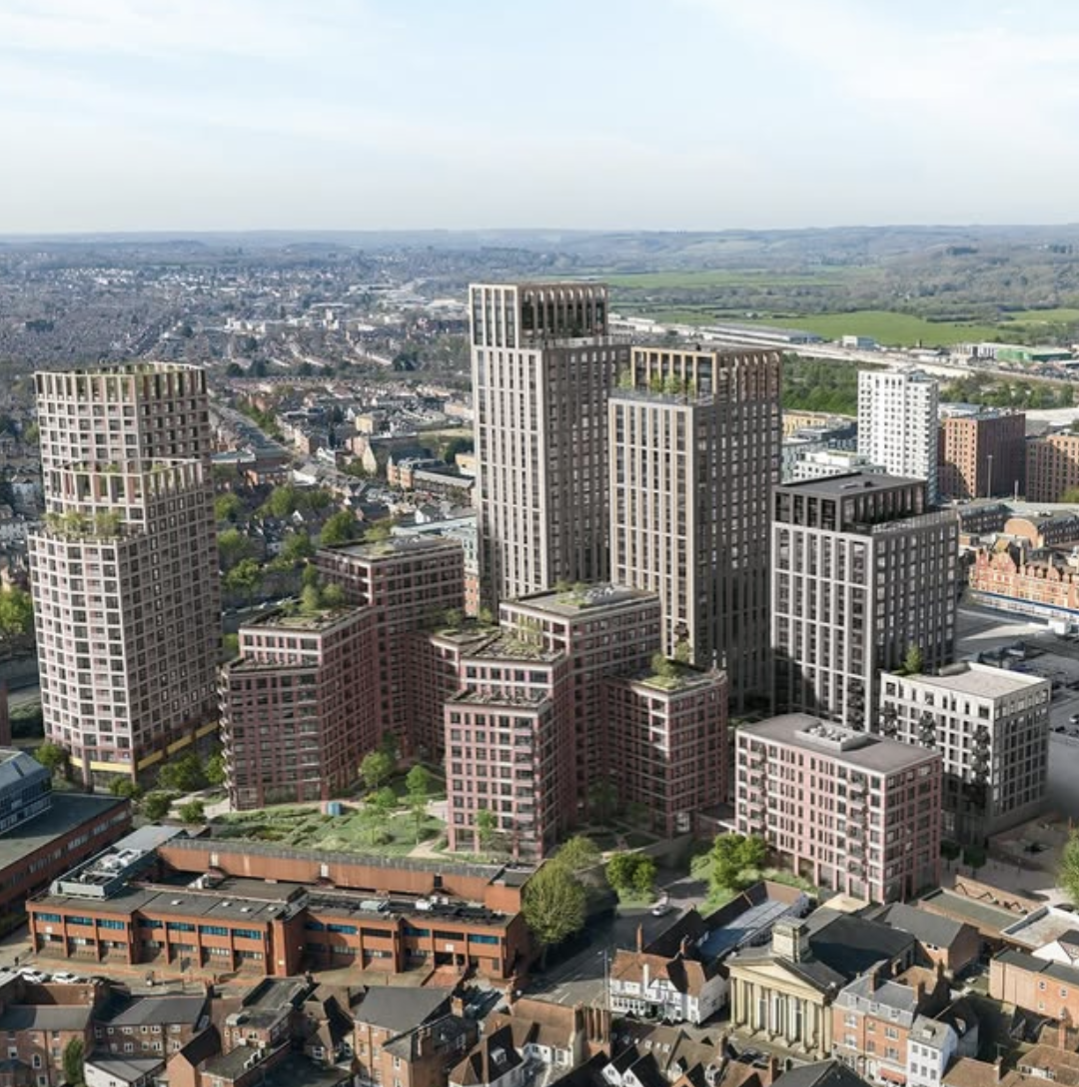
The civic centre offices were vacated in 2014 and demolished shortly afterwards. It was briefly a community garden but reclaimed ahead of its regeneration. The council has signed a deal with same developer involved in the adjacent Broad Street Mall residential scheme, which certainly sounds like a pragmatic decision. But my understanding of the plans is that they need to be sequenced with the mall towers built first, followed by the former civic site (now known as Minster Quarter Central). The designs haven’t been fully published and a planning application is still awaited. I don’t know what the delay is, but unusually, the various consultancies involved in developing the plans have lost their patience and their normal discipline on discretion. So despite the council releasing only vague details and a ground-level view, I was able to find a visual of the complete proposed scheme on a corporate Instagram post.
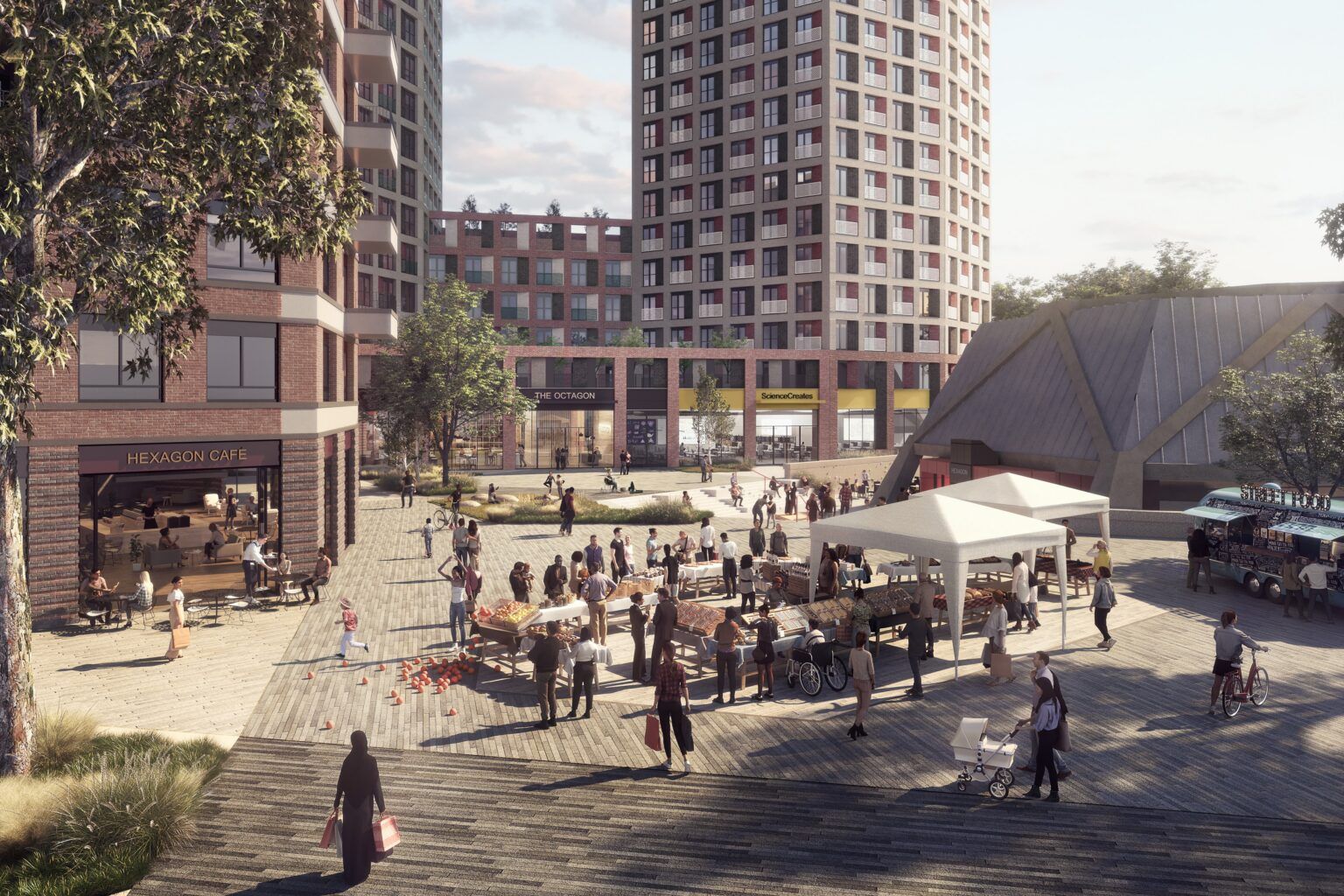
I think the envisaged square area outside the Hexagon could be a success – I can see why the council did release that image (below). And with the police station site coming forward as well, they are right to point to this area as a major future regeneration zone. But depressingly, the mall has recently started re-advertising for tenants in the space to be demolished for its scheme, so it really doesn’t look like happening any time soon, and if the civic site is indeed sequenced afterwards then we’re looking at 15 to 20 years before the above becomes reality. And that’s being optimistic.
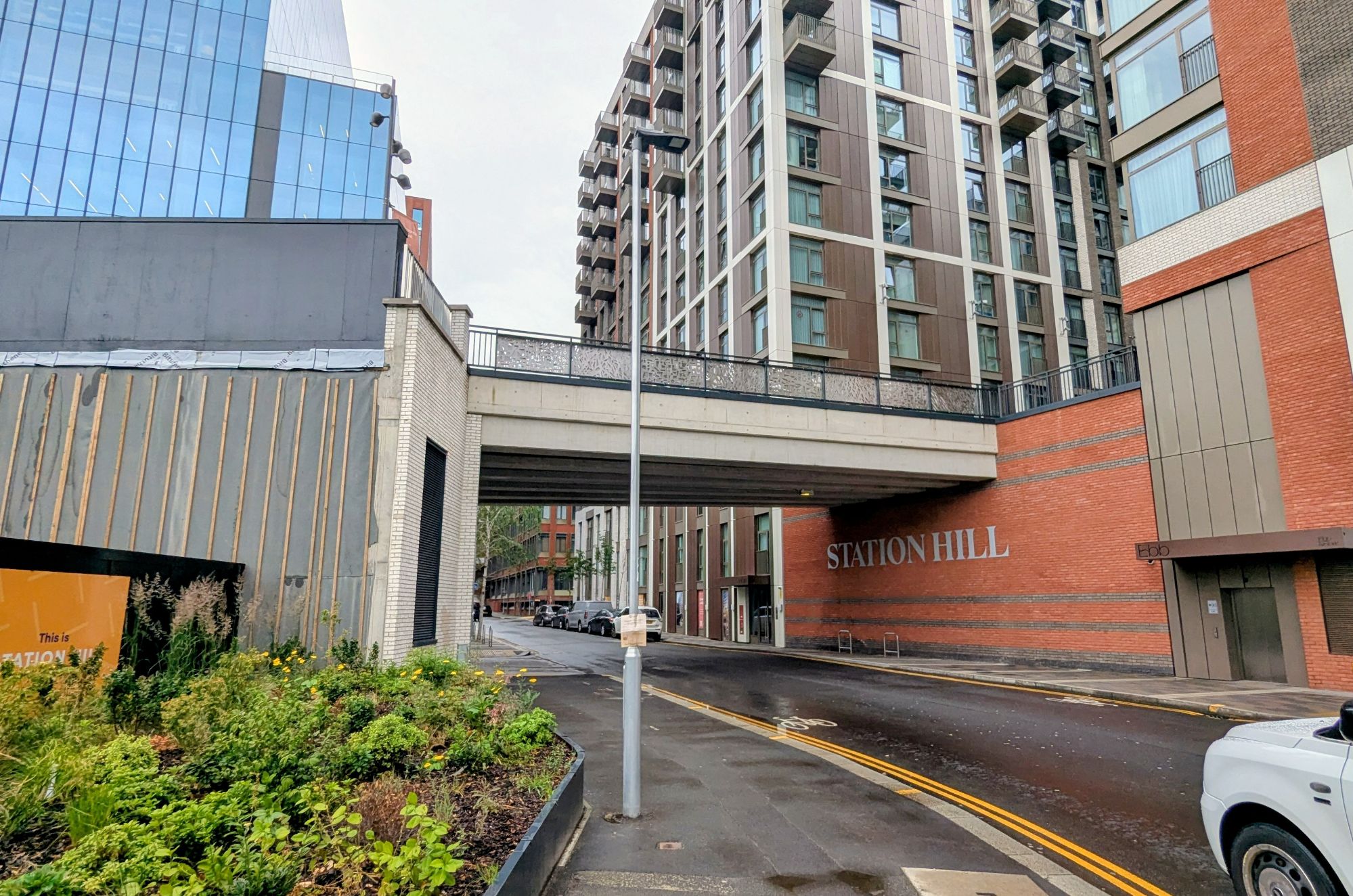
The final large red zone is the remaining land at Station Hill, last meaningfully occupied by Xafinity in 2014. But let’s be fair, the completed elements at Station Hill and Friar’s Walk are very successful, despite some odd delays opening the announced ground floor food and drink establishments. The remaining phase has now been split into two, as a means to maintain momentum, and last week the council gave the nod to the first of those, so let’s be optimistic and say this particular red box might soon be removed, or at least gradually reduced in size.
The amber zones – large areas redundant for 3 or more years – include the former Debenham’s at The Oracle. However, based on the end result at the former House of Fraser end, there are grounds for optimism. All three floors seem to be attracting a lot of custom – the bowling has been needed for years and is bringing families and young people into town; TK Maxx is a very popular store, and the vast new Zara is an incredible maze of interconnecting separate rooms. A residential plan for part of the former Debenham’s is approved, but rumours are that Hammerson is now minded to cancel and instead commit the whole space to retail and leisure. I’m pretty hopeful this site won’t turn red in a future iteration of my map.
Napier Court is a disaster, with the council refusing a major residential scheme despite admitting they liked the look of it. The issue is the conundrum of affordable housing allocations. Every council is fighting for its entitlement of affordable homes within new schemes, and sometimes in negotiations you have to walk away – I understand that. The irony is that the only long term way to make housing more affordable is to increase supply nationally, and yet councils parochially fight their corner with the inevitable result of refused and blocked housing schemes all over the place, meaning on a wider scale the lack of supply and increasing demand pushes prices ever higher. I don’t know the extent to which affordable housing is blocking some of the schemes I’ve referred to earlier. I’d invite any contributions on that matter in the comments. In the meantime, on this site, we’re left with derelict buildings. And I have no update at all on Norman Place across the road, but I suspect once again, “economic headwinds” have blown us into the longest of grass.
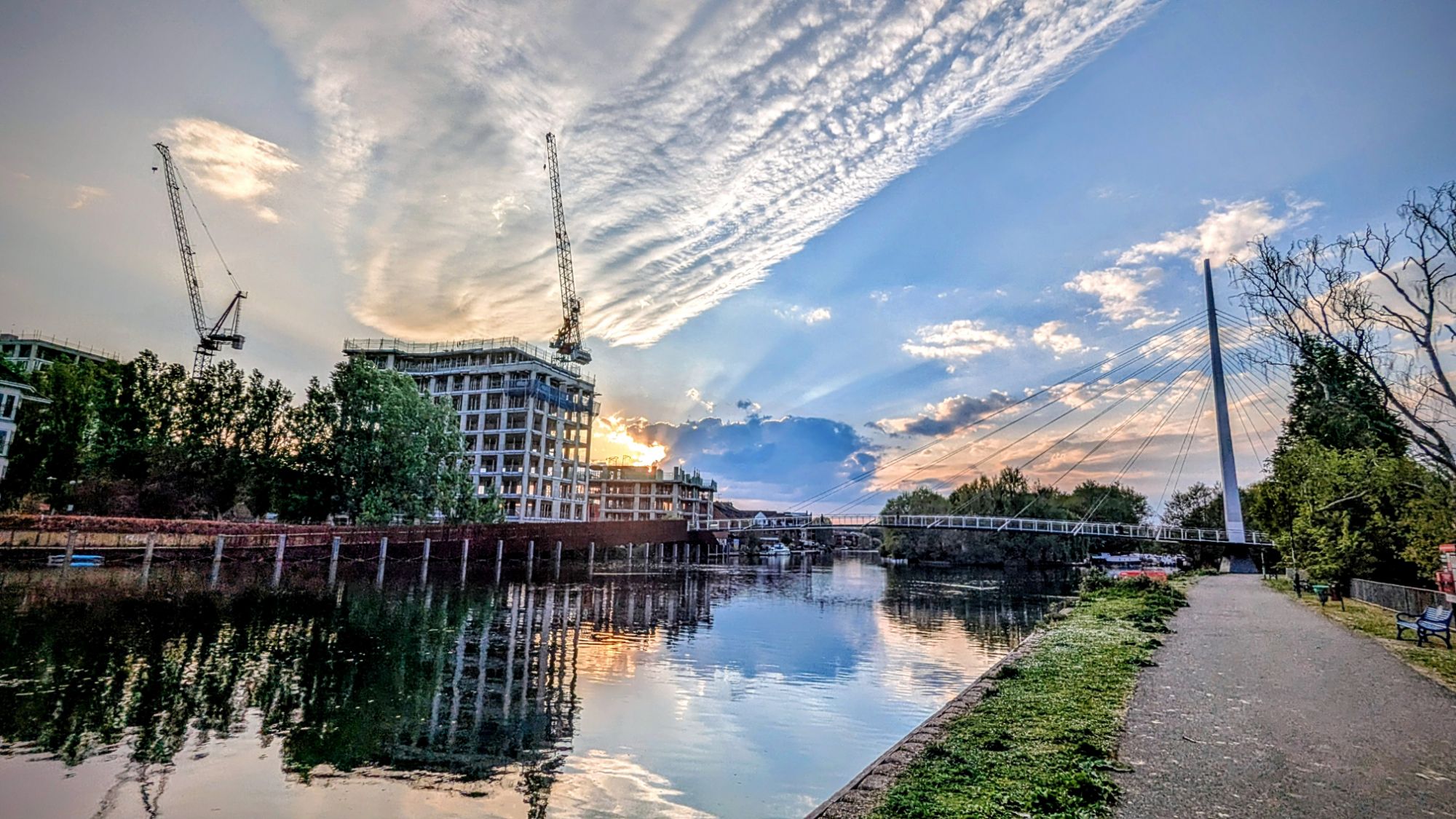
Moving onto the new council documents, but struggling to leave lament mode… The strategy celebrates the development that is taking place, for example describing the “Riverworks” Berkeley scheme by the Thames as follows: “Riverworks represents a step change in how Reading connects with the Thames. The project aims to deliver high quality access, new routes and riverside activation… reinforcing Reading’s identity as a riverside town.” And then later, “Riverworks demonstrates how high quality public access to the Thames can be unlocked while strengthening Reading’s riverside identity”. It goes on to sing the praises of the scheme’s environment credentials.
It is worth remembering that the council refused this scheme at planning, and fought a losing appeal against the developer. The council didn’t like the proposed access to the Thames, had concerns on environmental grounds, so deployed their resources on legal costs to stop the development. Now a different corner of the council is heralding the scheme on the basis of exactly those same elements. I suppose the new documents are trying to demonstrate economic momentum, and as the only tower cranes in the town centre sky, what else can they point at? But really, talk about left hand / right hand…
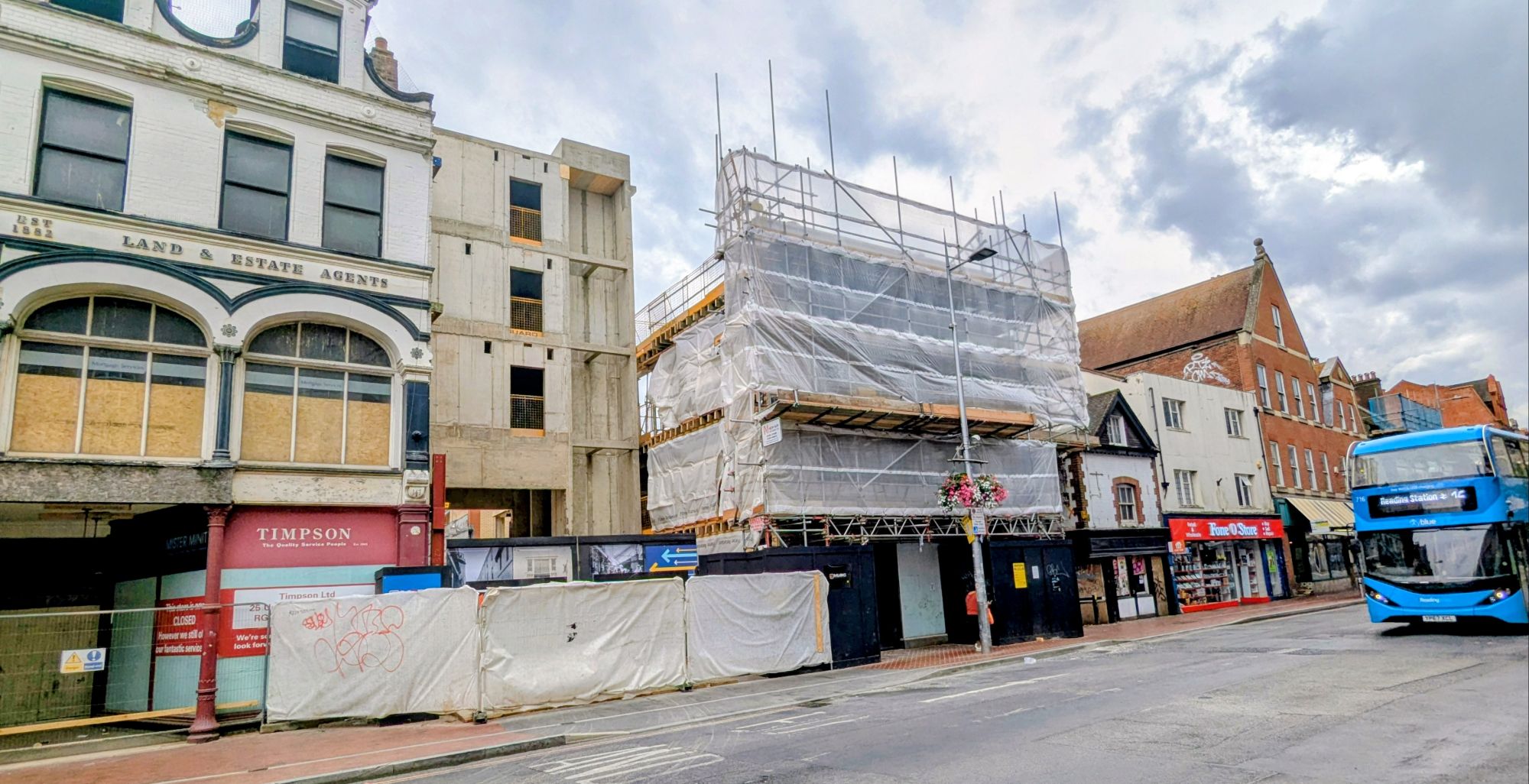
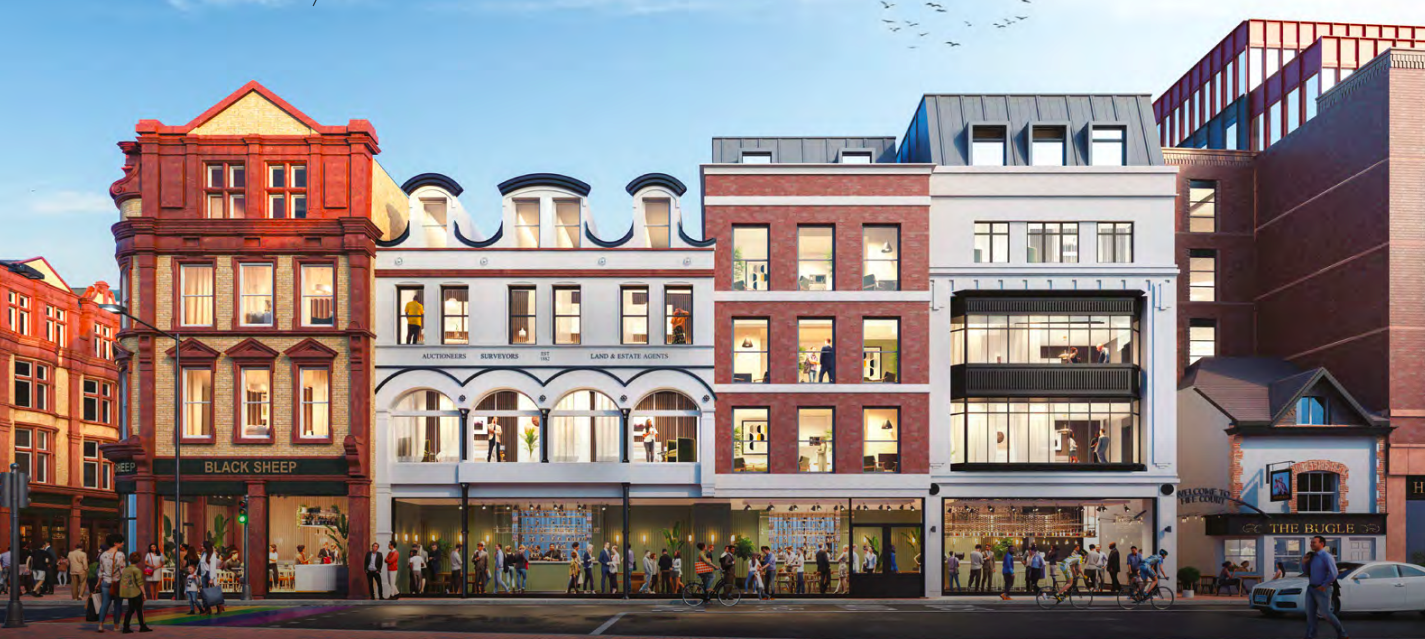
On the very brink of denouncing the council as anti-development, I narrowly row back from that conclusion remembering the Friar Street/Queen Victoria Street corner scheme, which is now finally underway with major work to transform it to the middle image above: apart-hotel and larger ground floor retail/leisure within renovated period buildings. The new retail fronts on Queen Victoria Street have just gone in and have transformed the appearance of what had been a decaying frontage for many years.
In addition, we have a brand new library just opened, and it’s an impressive new space. The Hexagon extension and refurbishment is moving forwards as well, and recent building reg submissions give hope that the Purple Turtle expansion is also imminent.
The new documents are grounded in seven principles for the development of the town centre: Healthy & Connected
Communities; Transforming Rivers & Public Spaces; Connected & Active Travel; A Greener, Climate Resilient
Centre; Culture, Heritage & Identity; Reimagining the Town Centre Experience; Supporting Growth & Innovation.
One reason for my ludicrous pre-amble here is simply the glaring omission of a necessary 8th: bringing into use the generationally derelict areas of the town centre. For documents that talk so much about development, failing to acknowledge the issues with so many sites is jarring. With that point made – at length – that’s have a look at a couple of the main ideas being put forward, although I’d encourage you to read the docs for yourself.
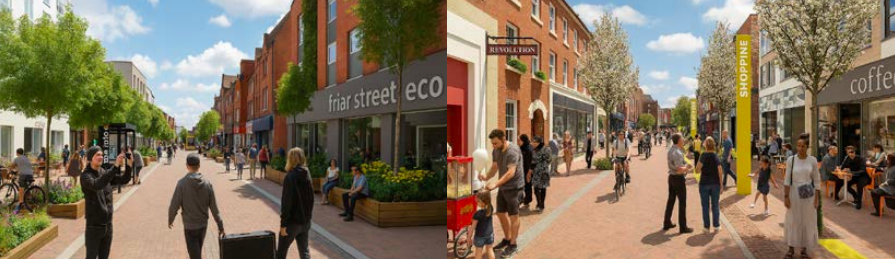
Ground level town centre sprucing up is a key theme, and it is much needed. The brickwork treatment given to the whole central area in the late nineties served its purpose but is looking dated – faded, dirty, and repeatedly dug up and replaced. Some sections now pool ankle-deep puddles after heavy rain. The Broad Street trees have aged far better than the surfaces that surround them.
The long term impact of the Oracle has been to drag the central area southwards, leaving Friar Street a no man’s land, and Station Road a noisy speed-walking corridor. The new plan recommends, amongst many ideas, these two roads to the be priority focus for improvement. The images above are included in the document, and are perhaps deliberate in their vague connection to the reality of these locations given the embryonic nature of the proposals.
The document proposes relocation of bus stops and rerouting of buses to reduce “bus dominance”. On that basis, I took the liberty of getting ahead of ourselves and asking AI to determine a possible more photo realistic result for these locations. Any excuse to play…
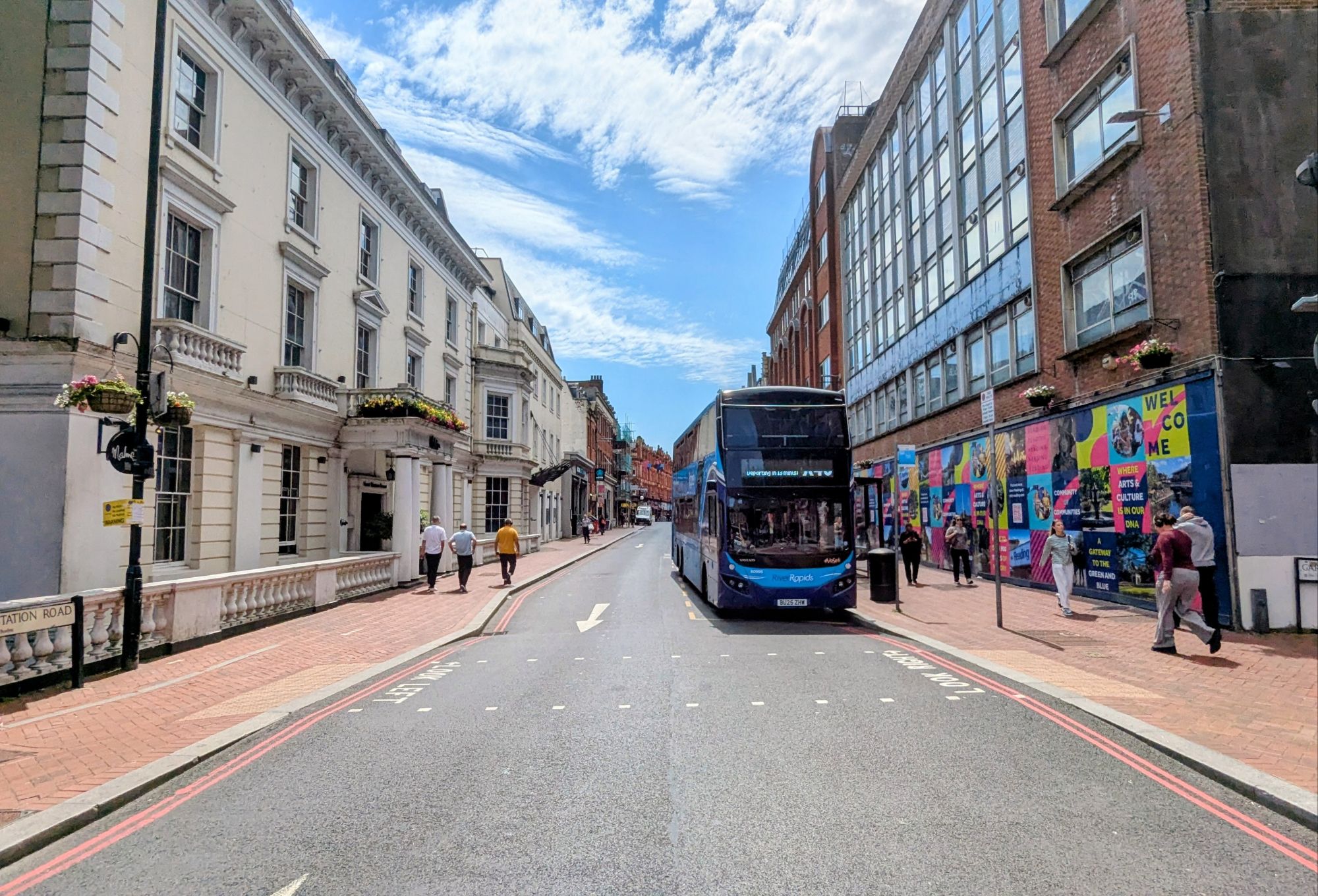
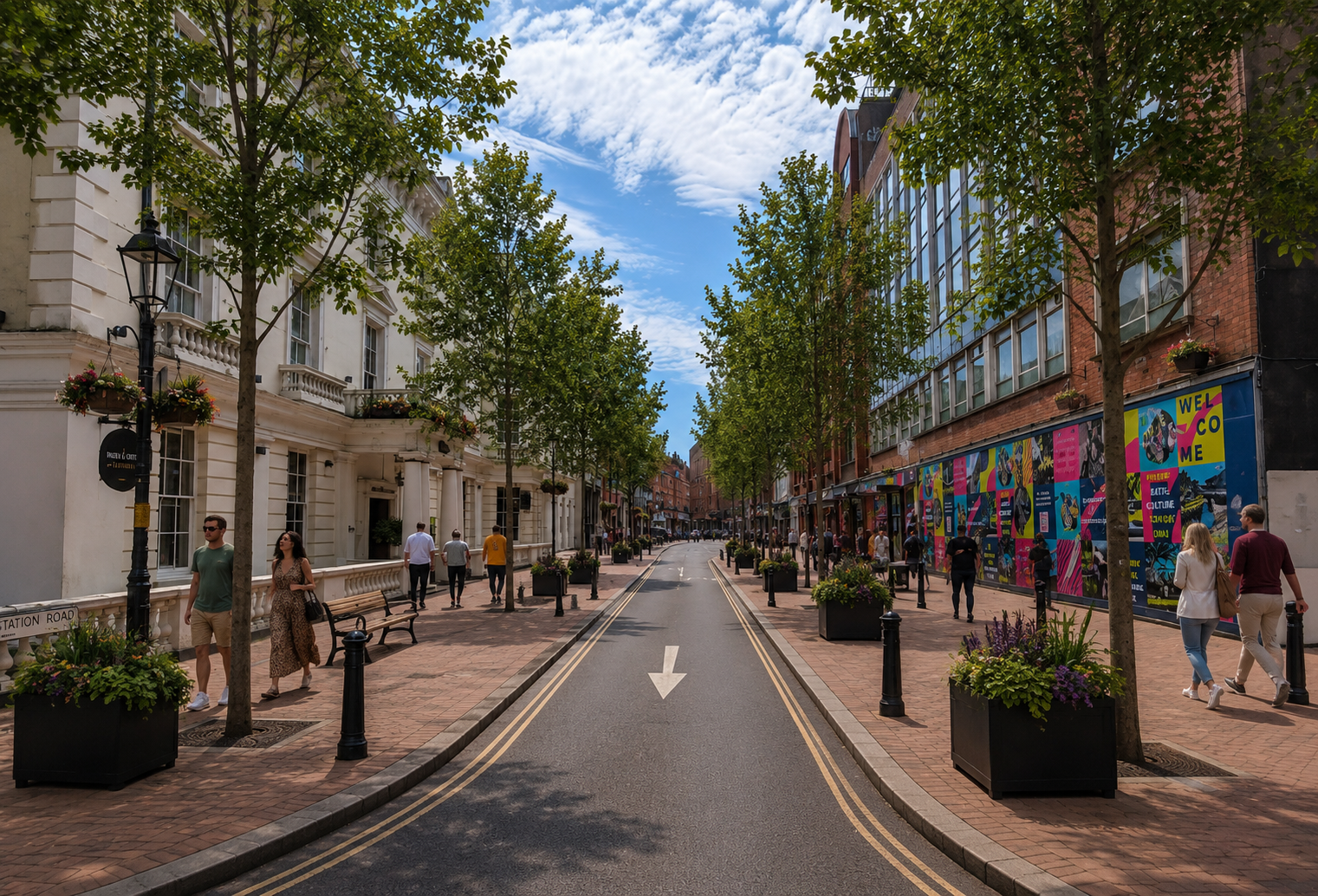
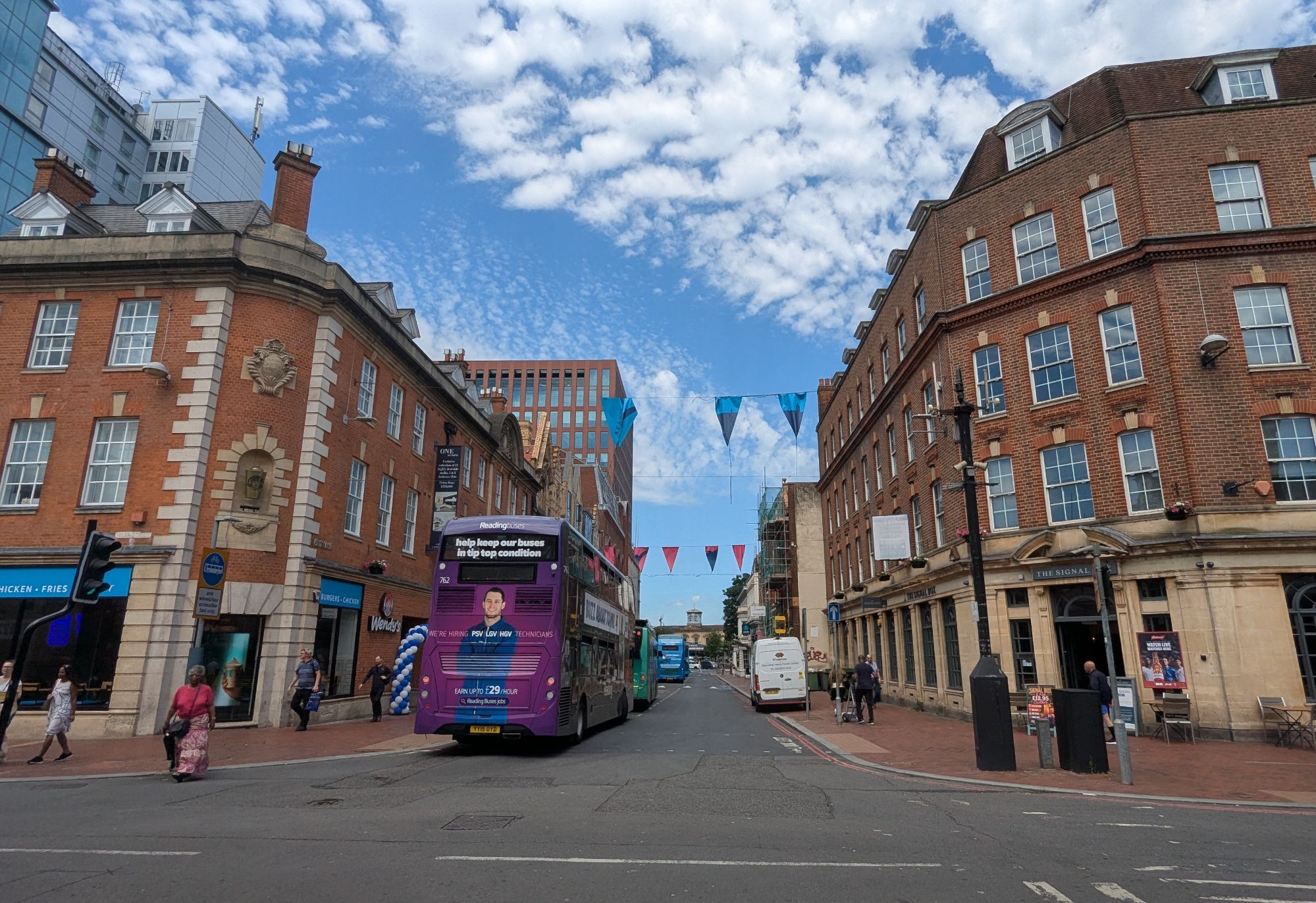
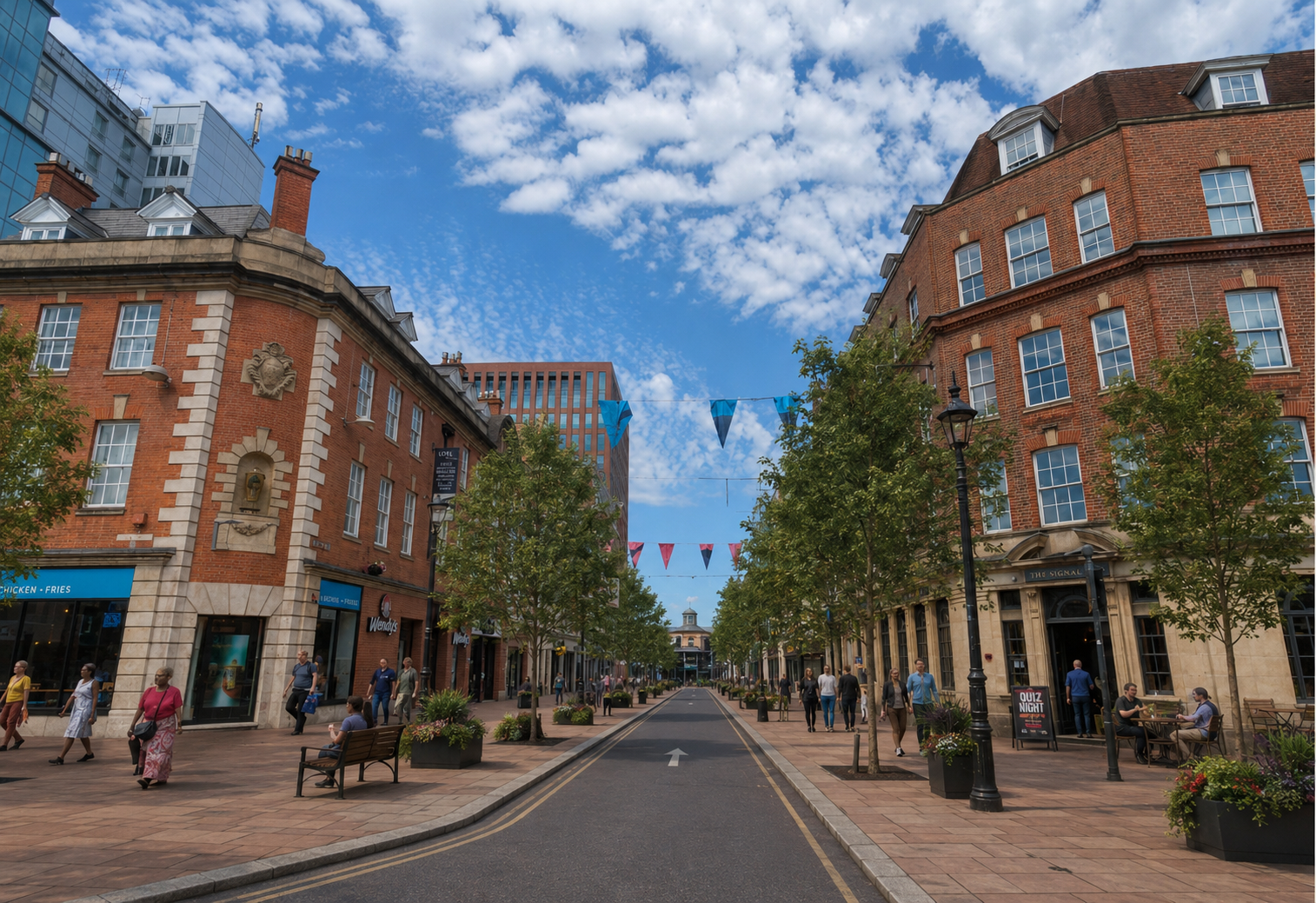
I accidentally closed off Friar Street on the second one there. But you get the idea. The council proposes bus stops to be relocated, hinting at accommodation within a Brunel Arcade-and-environs redevelopment plan that may be inching forward between the council and Network Rail behind the scenes. That could allow a single lane and wider, greener pavements. The same treatment is proposed along Friar Street – my AI result below. I do enjoy how it really embraced the cycling theme, adding cycling propaganda to the bus stop and pivoting Nisbet’s business!
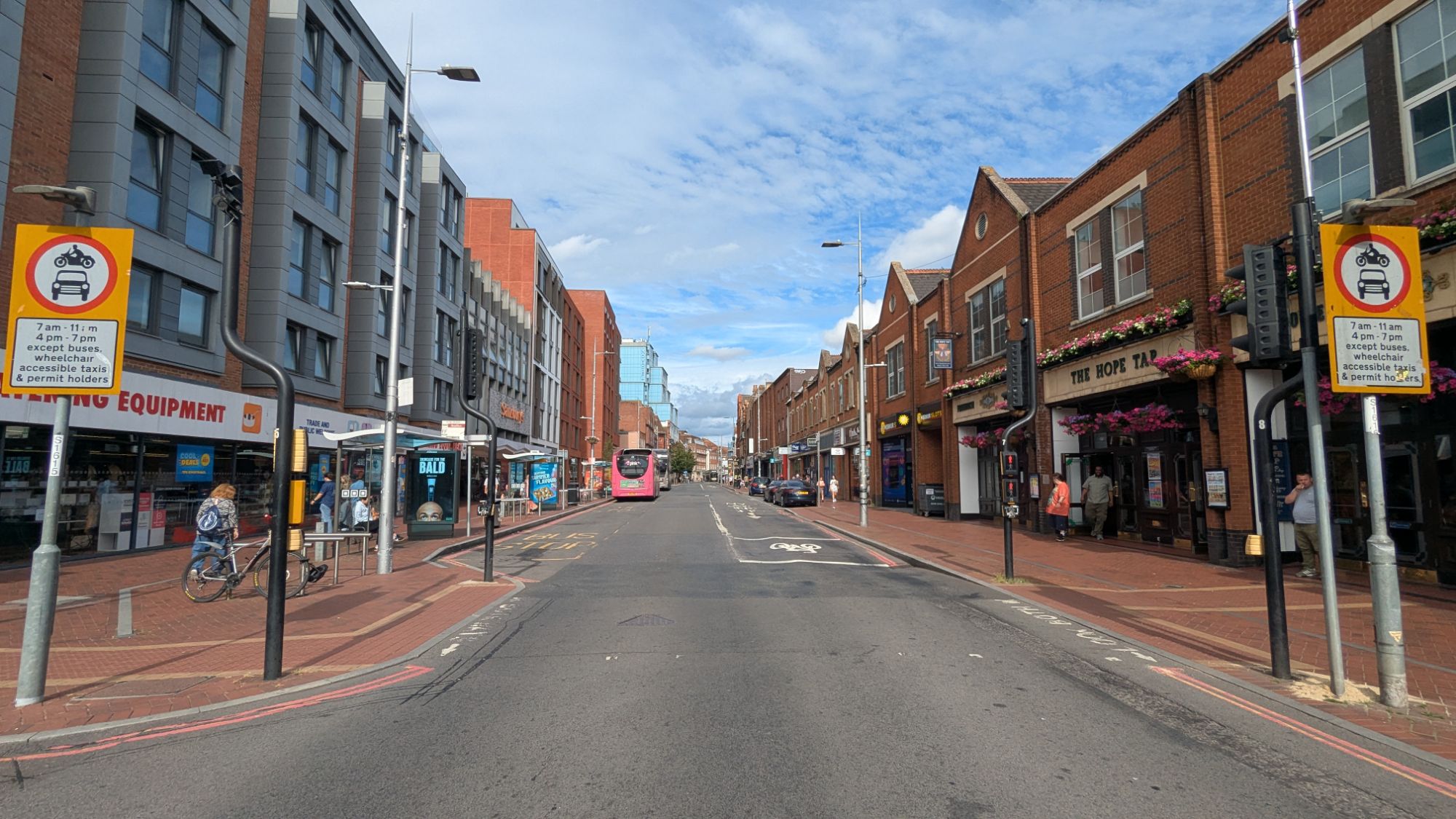
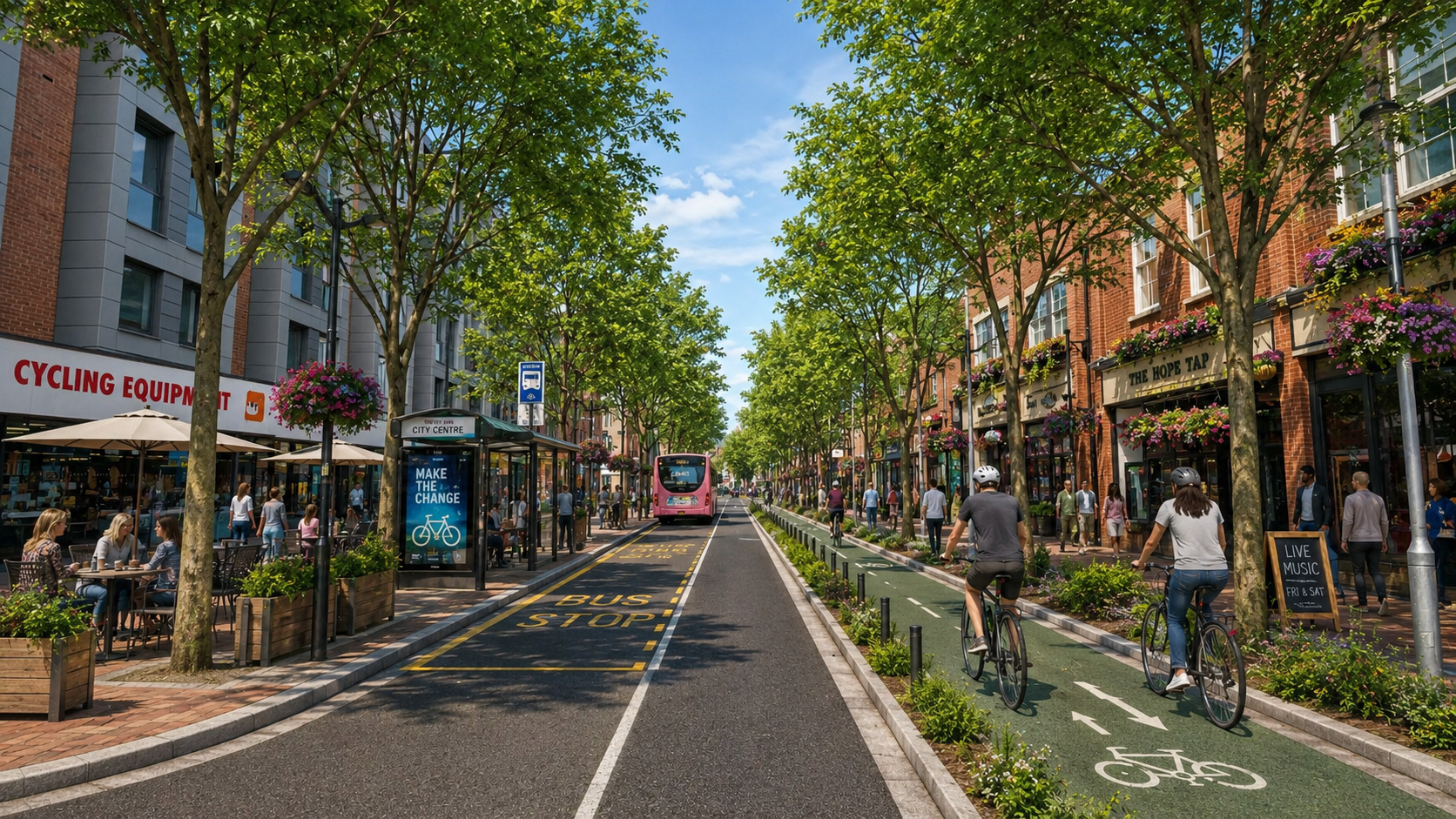
Ok, so I’ve not put Stantec out of business yet. Although maybe they should be worried?! Doubtless there’ll be all sorts of boring bother with sewers and the like that somewhat reduce the extent of the tree planting that might be possible. But nevertheless, it would be great to see these two scruffy areas given a major boost. The idea behind the plan must be to divert many buses via Garrard Street following the Station Hill development. A taxi rank relocation is bravely proposed, but they’ll have to find a viable plan to keep the taxi drivers on side. The full quote is “Removal of taxi rank and extension of Station Square to create seamless arrival space with new civic focus.” Hopefully firmer plans are being worked up…
In addition to the strategy paper and plan, the following week the council also officially backed an update to a seemingly forgotten 119-page public realm strategy. I’d previously covered it back in 2024, and it now feels like it contains some thinking that has now been superseded by the documents I’ve covered in this article. My understanding is that unlike the more aspirational town centre strategy, the public realm strategy has some weight in planning deliberations and so needed to be formally adopted. Either way, the council has been busy churning out PDFs – I just wish we could see some of the ideas realised PDQ. We await firmer commitments on that, and more to the point, funding – if Manchester and the Metro Mayors don’t mop up every penny. Hopefully it’s not just a case of the council needing more literature to fill up the shelves of its new library. Because right now it’s unclear whether these latest documents would be homed within fiction or non-fiction. The next chapter will reveal the answer…


Very comprehensive and informative summary (if a bit depressing).
LikeLiked by 1 person
Genuinely at a loss as to what Reading Council spends its time on. The most dangerous region for cycling anywhere in the UK outside of a few London boroughs. Bus services cancelled because Oxford does it better and cheaper (X40 vs Pink 22). No tourism plan to speak of. One of the most affluent in the country (cf The Reading Reporter) but a town centre that looks like the same downtrodden, vape-and-charity-and-coffee high street in other areas with, as you say, prominent buildings standing derelict for generations. An incredibly half-hearted and last minute ‘city of culture’ bid where we were beaten by Swindon. Pot holes everywhere, usually appearing a few months after the same roads were repaired. Sure, it felt more run-down in the 1990s, but what’s happening (or not happening) is tragic.
LikeLiked by 1 person
excellent post as always! AI does help you imagine a different future. Let’s hope something like this can come to pass. Reading really needs a spruce up!
LikeLiked by 1 person
The AI vision is great. On the topic of taxis, it’s time we end the weird Black Cab cartel in Reading. There is no need for a taxi rank. The queue of cabs is ridiculous. I know people don’t like tax avoiding companies like Uber and Waymo but we need to embrace technology that makes everyone’s life more easy and improves the town.
LikeLiked by 1 person
noticed the Vue cinema isn’t shaded in, unlike the former Debenhams across the river. I thought planning permission had been granted to rip both buildings down as a joint project? Has there been any news on that?
your reporting is always top quality! Thank you for sharing
LikeLiked by 1 person
Thanks!
I didn’t shade in Vue as it’s still in use (except some restaurant space below) whereas the other shaded sites sit completely idle.
Vue signed a 5 year deal a year or two back so it was always going to be a second phase. I guess they’ll decide in due course whether to pursue the residential or to sign up a cinema operator for longer and refurbish instead of demolish.
LikeLike
Ah, makes sense! The cinema could really do with a refurb though
LikeLiked by 1 person
Great article!
One other site that I note has been vacant for a long time and is missing from your map is the Bristol and West Arcade, along with the older buildings on the corner of Market Place – any idea on what is happening there?
LikeLiked by 1 person
Thanks!
The Bristol and West now has people living in the upper floors. A restaurant is about to open in part of the Friar St ground floor. The owner is slowly working around the site trying to bring it into use. The council harshly rejected a small upward mansard roof extension so they may try again with that. As for the space out the back (the abandoned part built swimming pool from a failed regen 2 0years ago), no idea!
LikeLike
The Civic centre, Broad Street Mall and Police Station Redevelopment in my opinion needs to be stalled. There are some odd levels of the land with it’s own road System. The magistrates court needs to come on board to this scheme, whoever owns the travel lodge and the penta hotel. Scrap the lot including the broad street mall and fountain house.
Reroute the idr east of the hexagon to rejoin at Chatham street, some ramps in the middle of the new alignment to link to a new car park surrounded by a fake building green building and position the car parking where the IDR was and bury the lot for good. Then remove the north side slip roads onto the new alignment at castle street and realign castle street to the east of the roundabout. with a car parking where the IDR sat Then there is one massive site from, Castle street to the Oxford Road and over to Howard Street.
LikeLiked by 1 person
Reading needs more retail outlets to get people coming back into the town. Sadly it’s not the only town/city suffering at the moment
LikeLiked by 1 person