Yesterday I visited the public exhibition organised by Wokingham council for a new park and ride site to the east of Reading.
The proposed scheme would see a little over 300 parking spaces and a bus stop created on land known as Broken Brow. The site is scrubland owned by Oracle (the computer company, not the shopping centre) immediately west of the roundabout at the end of the A3290 at Thames Valley (Business) Park. A new exit from the roundabout would lead into the car park. Planting would take place to ensure walkers on the Thames Path would be screened from the site.
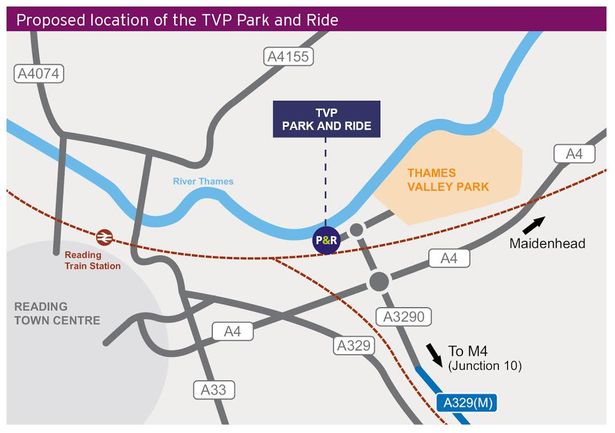
Reading Borough Council is separately planning a new public transport-only road link from the Broken Brow site, across a new bridge over the mouth of the Kennet to Napier Road near Tesco. The proposed car park and access will be layed out in such a way that the proposed new road could be accommodated. However, the representatives at the exhibition were at pains to be clear that the schemes are separate.
Recent reports in the local press have featured fears from the Green Party that the two schemes might not be so separate. Whilst they oppose both, it is the new road that concerns them particularly, on the basis that it might be subsequently reclassified to allow use of the evil private motor car. I think those fears are unfounded. It’s difficult to see Napier Road and Vastern Road roundabout being able to cope with any more traffic than they currently carry, let alone the volumes from what would be effectively a Cemetery Junction by-pass. Moreover, the council and the Greens are in broad agreement that anything that temps more traffic into central Reading purely as a through-route would be incredibly counter-productive. On that basis, the prospect of a fast public transport link from the East into the town centre should probably be welcomed from an environmental standpoint, given its potential to provide a compelling alternative to driving into town.
Perhaps stronger grounds for disgruntlement at the Park & Ride plans would be that they constitute a fairly uninspiring use of a rare Thames-side site that is suitable for some form of development. The adjacent ‘Wokingham’ Waterside Centre, although cheekily named by our landlocked neighbours seven miles down the road, is an excellent example of a riverside leisure facility. Broken Brow could surely be better exploited with an extension to those water sports facilities. Equally, with the clamour for new housing stock, it’s surprising that this site isn’t being considered, if it’s now deemed suitable for conversion from green to tarmac black.
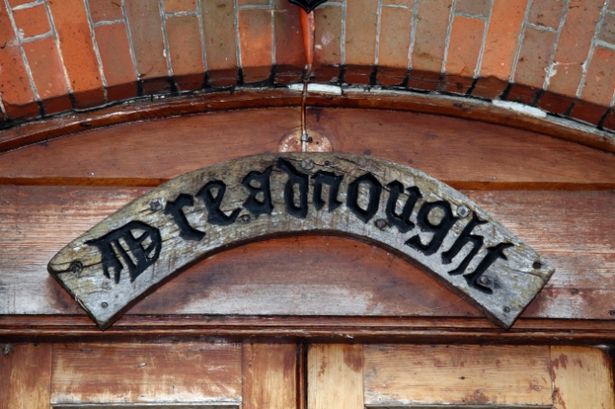
One interesting aside to this development is the fact that it will give the abandoned and isolated Dreadnought Inn – the only building on this stretch of river – direct access from a huge new car park. A few years back, there was a proposal to convert it to a riverside Tea Room. Those plans have gone nowhere, and the site has no use besides storing a few boats in its beer garden for the university. Assuming the building structure is sound, with the addition of easy parking access, the site constitutes a great opportunity for some entrepreneur out there to create a busy gastro-pub that could quite conceivably become a Sunday lunch and walk hub for East Reading (sorry, north Wokingham), as well as doing a brisk trade during the week for business lunches from Thames Valley Park.
But back to the Park and Ride. The idea is actually quite neat. They’d simply use the existing Thames Valley Park shuttle buses to pick up on their way back to the station in the mornings (they currently go back empty), and vice versa in the evenings. Assuming these two sets of users don’t just swap jobs, this would make much better use of those buses, and subsidise the costs of running the service. And that is probably why Oracle is prepared to give over the land for that use. For weekends though, this is the new Dreadnought pub car park.
 Reading-on-Thames
[…] Greens have also been opposed to the park and ride element of the overall scheme. Apart from the clear contradiction of lamenting a solution designed to […]
LikeLike
Three hundred spaces doesn’t really seem worth bothering with…
LikeLike
Well I’m glad that you think the scheme is ‘neat’. As a near-by resident I am furious that this ridiculous £31.5 million scheme is being pushed through. The council’s own reports show that it will not improve air quality at Cemetery Junction and that it is will actually INCREASE congestion in the area. But then this is a scheme that has been proposed, supported, rubber stamped and ultimately funded by the same small group of people despite the outcry from local residents and the Environment Agency – you have to wonder what is in it for them. This scrub area was vital for local wildlife, it has just been cleared and it looks like a bomb site. One of the few areas you can go within Reading to escape the congestion that strangles the entire town has been decimated for a handful of Wokingham dwellers who seemingly lack the imagination to loosen their grip on their car steering wheels and just get on a bus or a train in Wokingham. Most Thameside towns look after their watersides. They invest in them and make them an attraction for locals and visitors, but we are not that lucky.
LikeLike
thanks for sharing your views Joann. I have a more recent article on the subject where you might want to comment:
LikeLike
As the current resident of the property, I wanted to post info and an update on this article. The Dreadnought pub dates back to the mid 1700s, first being used as a Public House for travelling watermen on the Thames and Kennet. When purchased by the university in 1954, it was turned into a river studies centre: outside was a lab and inside was accommodation for the professor and an office downstairs (this is unconfirmed). As river studies fell out of use, the site was turned into the Sailing club’s centre. The pub Garden stored small laser-style sailing boats, and the old lab building was used to store ad-hoc other sailing items. The Dreadnought contained, and still does, a club bar, club room, kitchen and changing rooms, all unused from the 90s, when the sailing club ceased. I’m told that the river was dangerous in those days, with sail boats trying to find wind, rowers and scullers, canoes and kayakers as well as work boats and barges.
Further downstream was the Reading Working Man’s Regatta boathouse which burnt down in the early 2000s. Whilst the Regatta boathouse was never a club, it was the direct successor to East Reading Boat Club and Reading Tradesman. The university allowed the Regatta committee to use the land around the Dreadnought and the Club was named Thames Valley Park Rowing Club. The club is still very active today and the boats stored are mostly owned privately (some club and some regatta). The Rowing club is not affiliated with the university and never has been. The university have always had a presence below Caversham bridge. Although they once submitted plans to build a proper university boathouse alongside the Dreadnought.
Now the university are trying to push forward with new tea room proposals. I won’t go into detail but it would see the end of 150 years of Club rowing on this reach.
The Park and Ride has negatively affected the area and the council need to be held to account for this. Despite the park-and-ride covering a few acres of land, on a busy day, I would estimate 20-30 cars are parked there. These seem to be overflow parking for the business park. The biggest use is as a meet for modified cars in the evening; with no security, barriers or enforced parking charges, the evening see endless drifting, burnouts and racing. The roads leading to the area also have evidence of anti-social behaviour. It’s a shame that the old scrubland has been destroyed in name of the motor-car. The scheme has been a massive failure and the council won’t take responsibility for it. It’s also a shame that the car park is 3 meters from the door of the Dreadnought…
LikeLiked by 1 person
thank you for sharing that background and current observations. It’s a shame that the P&R isn’t yet making a positive contribution to either its immediate locality or the wider transport network. In hindsight, maybe without the direct link road to Tesco its viability is compromised. I’m sure others might also point to the decline of business parks, post Covid changes in commuter patterns, and other factors. I have heard of attempts to find ways to provide P&R bus services to the hospital and town centre – I think it’s in the newly released transport strategy. But I’d accept it’s had a very slow start, and that’s probably generous.
I presume any new proposals for the Dreadnought wouldn’t impact the Waterside Centre, which I presume still sees rowing taking place on this stretch of the water. Is that not a rowing club, or a viable base for a rowing club?
Are you able to explain a little more about the new tea room proposals?
LikeLike