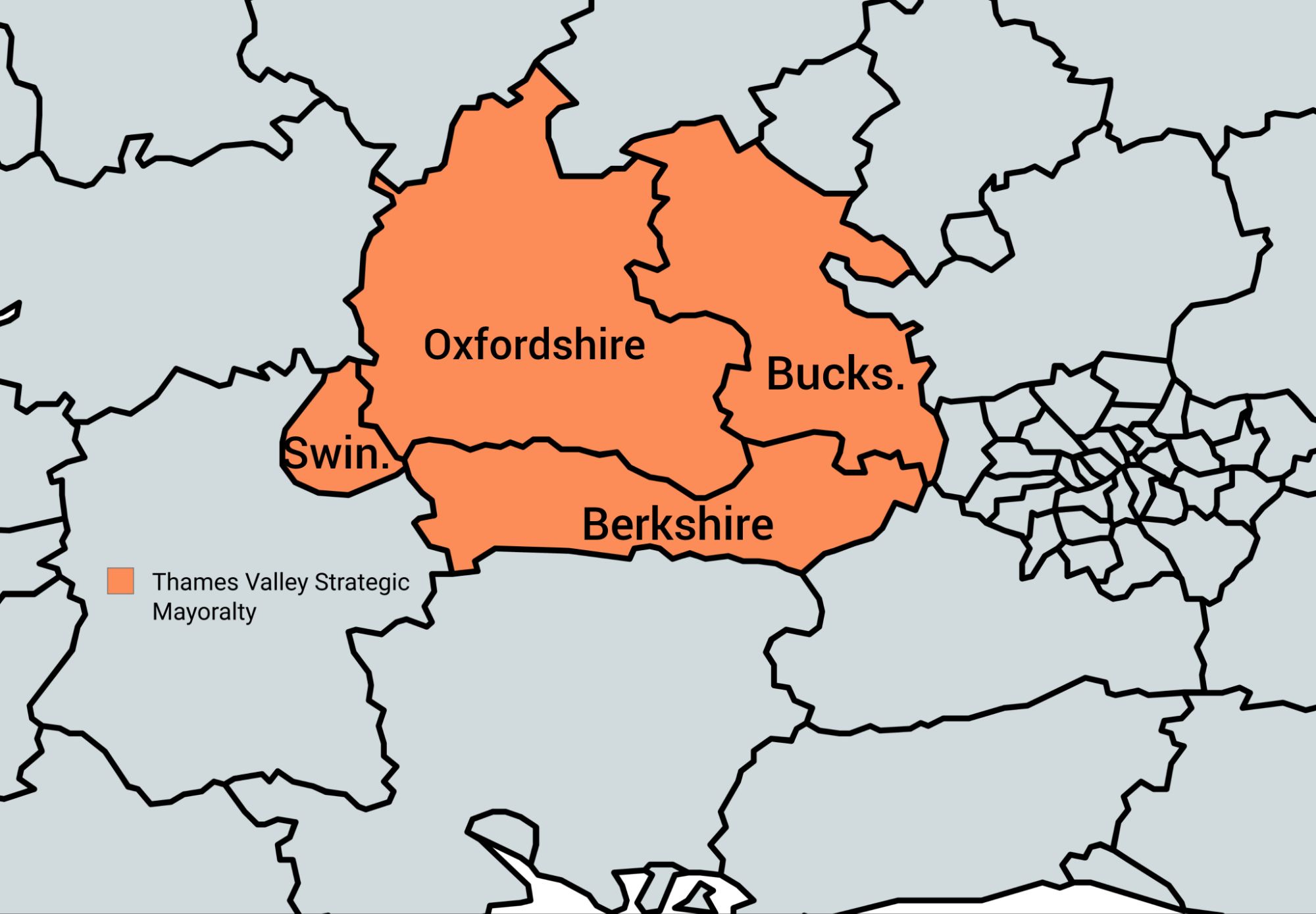
A frenzied process of provincial match-making is in full swing, with central government having issued an edict that the country must be chopped up into regions, each of which will elect a mayor to receive devolved executive powers. City regions and combined authorities in the larger cities have operated this model for some time. Now the rest of England is to play the same game, but with the added fun of a new rule: regions should have a population of at least 1.5 million. Rather than carve up the map in Whitehall, the government has amusingly thrown it over to the nation’s Town Halls to figure it out for themselves, missing the glorious opportunity for a TV show format in the process. So where’s Reading ending up? Let’s speculate…
I say ‘regions’. We’re actually going with the term “strategic mayoral authority” – evoking a blend of corporate jargon with medieval heraldry. Perhaps this garbled terminology guarantees cultural irrelevance – who’s ever going to ask “Which strategic mayoralty do you live in?”. Nevertheless, depending on the extent of powers devolved, the answer to that question could have a meaningful influence on local affairs.
So will it be a mayor of Berkshire? Probably not. Berkshire has around 950k residents – too few to snare a mayor. We’ll need to form a bigger club. We could look south, towards our BBC regional overlords in Southampton, but they have enough people to go it alone, dragging the Isle of Wight with them kicking and screaming. They tried to grab Bournemouth too, but Bournemouth are so desperate to avoid repatriating with Hampshire that they’ve accepted an invite to a proposed new club called “Heart of Wessex”. This Thomas Hardy theme park of a region will include Somerset, Dorset and Wiltshire. No invite for Aldbrickham.
Here the plot thickens. Swindon doesn’t want any part of that Wessex nonsense. Instead they want to team up with us! Reading’s economic strategy has been essentially to go all in on Reading station, and build a load of flats creating a sizeable, young population in its town centre to offset the decline in regional shopper pilgrims and 5-days-a-week office workers that previously powered a commercial centre. Swindon, meanwhile, has suffered as the good folk of Wiltshire abandoned them, and now they look set to abandon Wiltshire. The Reading model, whilst much maligned by our local social media commentariat, is a beacon of hope for Swindon, along with the potential to connect up with Oxford’s science sector.
Berkshire, Swindon and Oxfordshire then? Well, yes, I think they’re very likely. And Thames Valley will be the obvious name for the region. That would be at least 1.9m people so we’re good to go. But what about Buckinghamshire?
The Bucks problem centres on Milton Keynes with its metropolis ambitions and reluctance to be an obscure corner of a Thames Valley region. As such, they’ve already palled up with Luton and Bedford, amusingly snubbing Northampton. The government may have to intervene because Northants might otherwise be left orphaned. You’d have thought MK might have been tempted to tie up with Oxford, what with its new rail link and all that ‘CaMKOx‘ talk of an Oxford to Cambridge region. But no, they want to preside over a local empire of Luton and Bedford, abandoning Bucks thus leaving their historic shire with no real alternative to joining Team Thames Valley.
My prediction: a Thames Valley region of Berkshire, Oxfordshire, Buckinghamshire without Milton Keynes, plus probably Swindon.
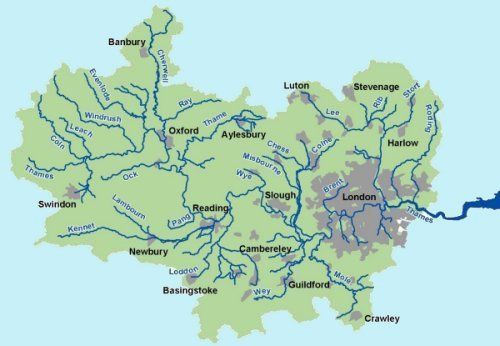
Conveniently, that would pretty much align with a map of the physical valley including Thames tributaries joining the river west of Windsor. So rather than an entirely arbitrary region, we’d at least be able to claim ours is defined by glaciation. We should really invite Basingstoke for full geographic compliance – Berkshire and North Hampshire’s 2-ten FM maybe had it right.
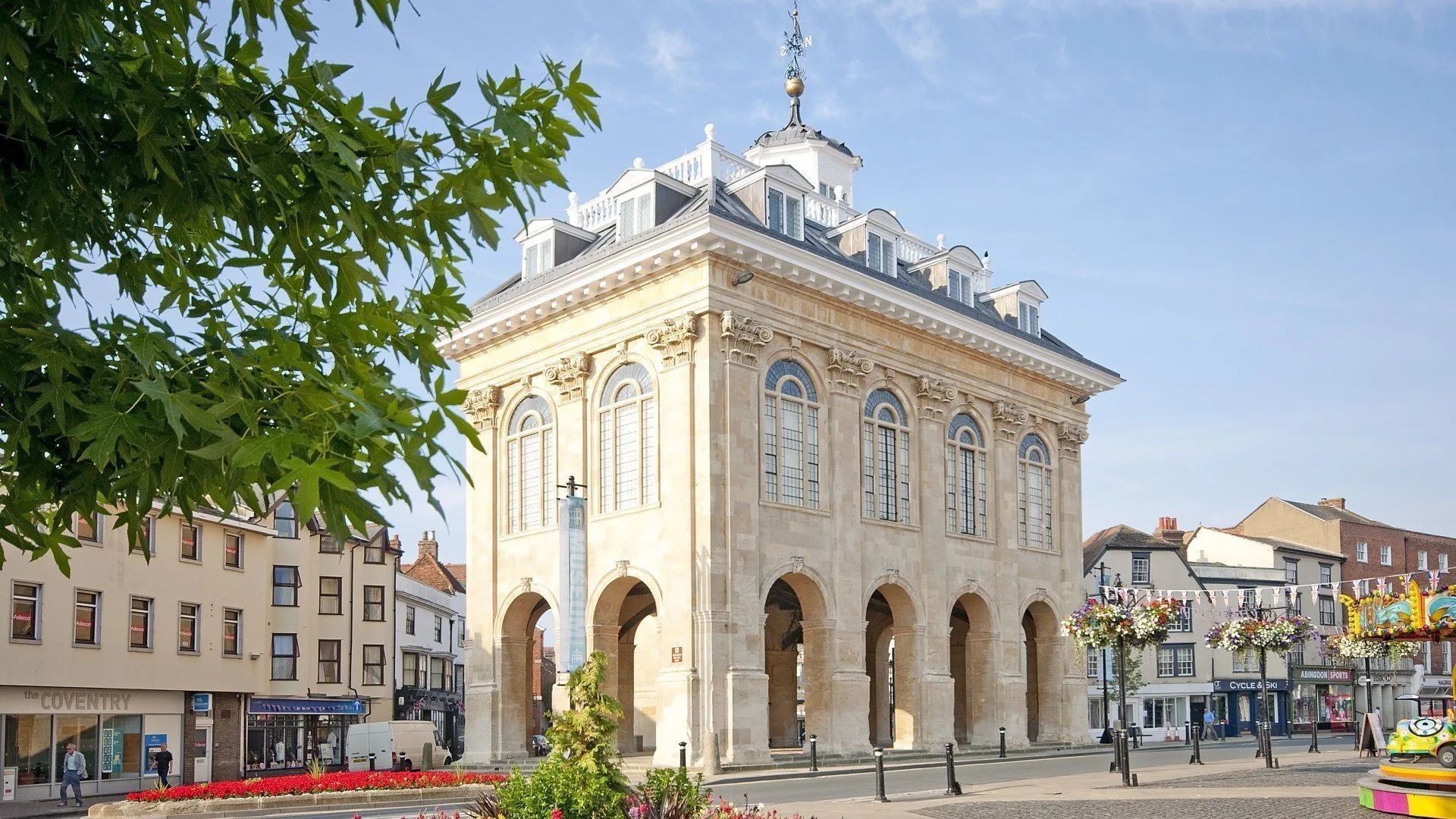
The mayor wouldn’t have a huge department – they’d be more of a lone figure working with the existing (or modified – I won’t get into that) unitary authorities. They’d inevitably spend a lot of time travelling around but need a base – even if it were a symbolic one – just a PO Box address from which to collect their mail. Here the real horse-trading starts. Would it be in Reading, as the largest urban settlement? Or Oxford due to its ethereal superiority? Swindon – surely not as the newcomer. Windsor? Too far east. The likely compromise would be Abingdon – the former county town of Berkshire before Oxfordshire conquered the territory.
Leaving the geopolitical jostling to one side, what’s the regional mayor idea supposed to achieve? Here we run into more interesting territory. The overriding concept is that the mayor will champion investment and economic growth. This has had some success in the Midlands and North. But that’s because the northern attitude is all about local rivalry, out-growing their neighbour, and trying to keep up with London. There’s constant demand for rail lines, tram systems, new towns… justified by pointing at the money invested “down South”, by which they mean London. The mayors have each become a regional economic cheerleader.
However, the South often thinks differently. The London mayor opposes Heathrow expansion – it’ll have to be done to them by central government. The HIF1 road scheme (quite why it’s named like a strain of bird flu is unclear) was rejected by Oxfordshire and had to be overruled by Whitehall. (It’s a Thames bridge and relief road for Didcot). Local politics in the South East seems to be more about countering the excesses of overdevelopment. The government might want a regional mayor to champion economic growth, but they might get a Lord Chief Nimby of Ye Olde Thames Valley.
Reading just really wants a new Thames Bridge out of this whole thing. But Oxfordshire will try to insist that new bridges should be metaphorical only. The government might be looking at a possible major new town east of Maidenhead, but local pressure may force the mayor to be the figurehead for Save Taplow.
For that reason, despite all the fun of picking teams in the playground, the long term success of Project Mayor is very much up in the air.
What do you think? I’d love to get your thoughts. Comments very welcome, no registration necessary.


This seems the most sensible option. Almost every big town is linked by rail to the others, some a little more to and fro than others (Slough to Aylesbury for example could be done entirely within this boundary but requiring three changes). The police already cover most of the area so links between the three counties have already been built. I would probably opt for Didcot as some sort of base for a mayor, simply as it is accessible from much of the rest, stops the inevitable big town squabbling and has space immediately opposite the station for a building if required. I’m really keen on the idea of devolution as it can put politics back into the hands of ordinary people, where they can see it working for them in a period where local in the U.K. has all but disappeared in media and the power of councils, many of which resemble little more than adult social care providers. But it really needs to be proper devolution. It needs areas like the Thames Valley to decide how best to spend its money rather than the competition for funding from central government situation we currently have. It needs to recognise that the overwhelming majority of people don’t stray too far from where they live in daily life, so local changes can make huge differences. Above all it needs to be democratically led spending of public money without the interference of central government. The fact that we have had several prime ministers discussing potholes rather than the much more serious stuff that central government should be preoccupied with speaks volumes. Those who spend much of their time in central london do not know what is best for Runcorn for example. Nothing ever changes locally because of this centralised attempt at control. Authorities need the power back to organise key public services as they did before the domestically damaging 1974 local government act, something I blame for many problems our own town has.
Much Maligned Town.
LikeLiked by 1 person
Thanks for sharing, MMT.
Good arguments for and against cropping up on this one!
LikeLike
Very, interesting & informative article but personally I don’t want to see this happen. From what I’ve seen, personally, devolution has been a disaster for Britain & I don’t understand the fascination with it.
Aside from encouraging the countries of the UK to pull away from each other & create division, when I look at city mayors I see politicians with inflated egos running their own little fiefdoms.
Look at London where the Mayor seems to behave like the Emperor of his own independant country & forgets that it is actually the capital of the whole of Britain & every corner of our Isles is affected by his decisions.
Far from putting local decision making in the hands of local people it will just create another layer of bureaucracy & more civil servants.
Councils are already struggling financially. How much more of taxpayers money will be siphoned into supporting this meaningless office & all the staff that will inevitably be needed.
I live in a hamlet in Wokingham borough but with Reading my closest town & I see how often there is discord between the 2 councils, as what seems right for the residents of one area can be completely wrong for the other. I can only imagine the disagreements between all the varying neighbourhoods of a possible ‘Thames Valley’ Mayoral area & the frustrations & waste that will come from that.
In conclusion, good for ambitious politicians, good for lawyers who will enjoy thwarting or delaying every piece of proposed legislation & good for the ever growing army of civil servants, but I very much doubt there’s any benefit for the rest of us
LikeLiked by 1 person
Britain is the most centralised countries in Europe from a governmental point of view. Without it, the UK would be pulling itself apart much harder than it is today. It’s Britain’s failure to devolve power that led to the first breakup of the UK, the creation of the Republic of Ireland.
The fundamental problem that the UK has is England is way too dominant. England makes up 83% of the UK, with almost all of the political power, Westminster votes in Scotland and Wales are barely relevant to the overall result and NI votes are completely irrelevant (with the exception of Theresa May’s electoral whoopsie). English MPs feed into Westminster and nowhere else.
Councils are fairly toothless and England simply doesn’t do regional planning outside of London. That needs to change rapidly, this is one way of both dealing with these imbalances, by creating alternate power bases, enabling a much more sensible, integrated planning capability.
Will it work?
Dunno, but it’s worth a try
LikeLiked by 1 person
Spot on. If any government wants to tackle regional inequalities then this is a great first step provided its real power rather than just a token organisation to lobby private money.
Much Maligned Town.
LikeLiked by 1 person
I’m old enough to remember the last Labour government’s Regional Spatial Strategies, developed after regional devolution was (probably rightly, wrong solution to the right problem) voted down by the northeast.
The RSSs were good; scrapping them was just dumb Tory ideology.
LikeLiked by 1 person
Strong argument! Thanks for sharing
LikeLike
As both a policy and a maps nerd, I will confess that I am equal parts fascinated and frustrated by this new process.
I cannot wait to see what oddly-shaped regions come out of this process, and the horse-trading of putting them together is very revealing of the way that certain local councils see themselves.
However this new boundary-making screams “unserious” to me. I cannot understand why we empower the Electoral Commission to expend long-term analytical energy on drawing constituencies so precisely, but allow administrative boundaries to follow the whims of day-to-day politics.
This reminds me of that xkcd comic about standards. Apart from the LAs themselves, we’re ending up with another set of map lines that don’t align for investment or planning. RDAs, Government Office Regions, LEPs, LLFAs, Arts Council Regions, RESPs, DNO regions, GDN regions, Highways authorities, etc. etc.
Do other nations ignore their existing administrative boundaries in the way that we do?
LikeLiked by 1 person
If of interest, I shared this article on three local Reddit communities. It attracted a variety of opinions. You can read the comments here:
Reading community discussion:https://www.reddit.com/r/reading/s/lGS9ZOA1xV
Swindon community discussion:https://www.reddit.com/r/Swindon/s/EFRSJpLvT5
Oxford community discussion:https://www.reddit.com/r/oxford/s/YCuh5564sd
LikeLike