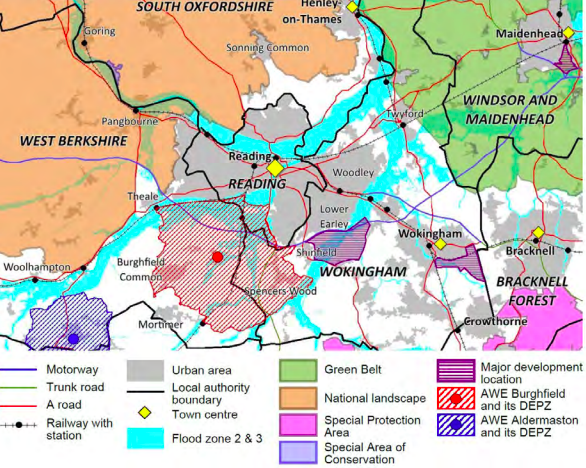
Last week the full council meeting was presented with a hugely detailed update to the local plan. The documents published included lengthy to and fro between the council and prospective developers around specific sites. Given the relatively light coverage in local media, I’ve pulled out some quotes that offer glimpses into the schemes that might be coming forward – or very much not in some cases – over the coming few years. I hope it’s useful…
Town Centre
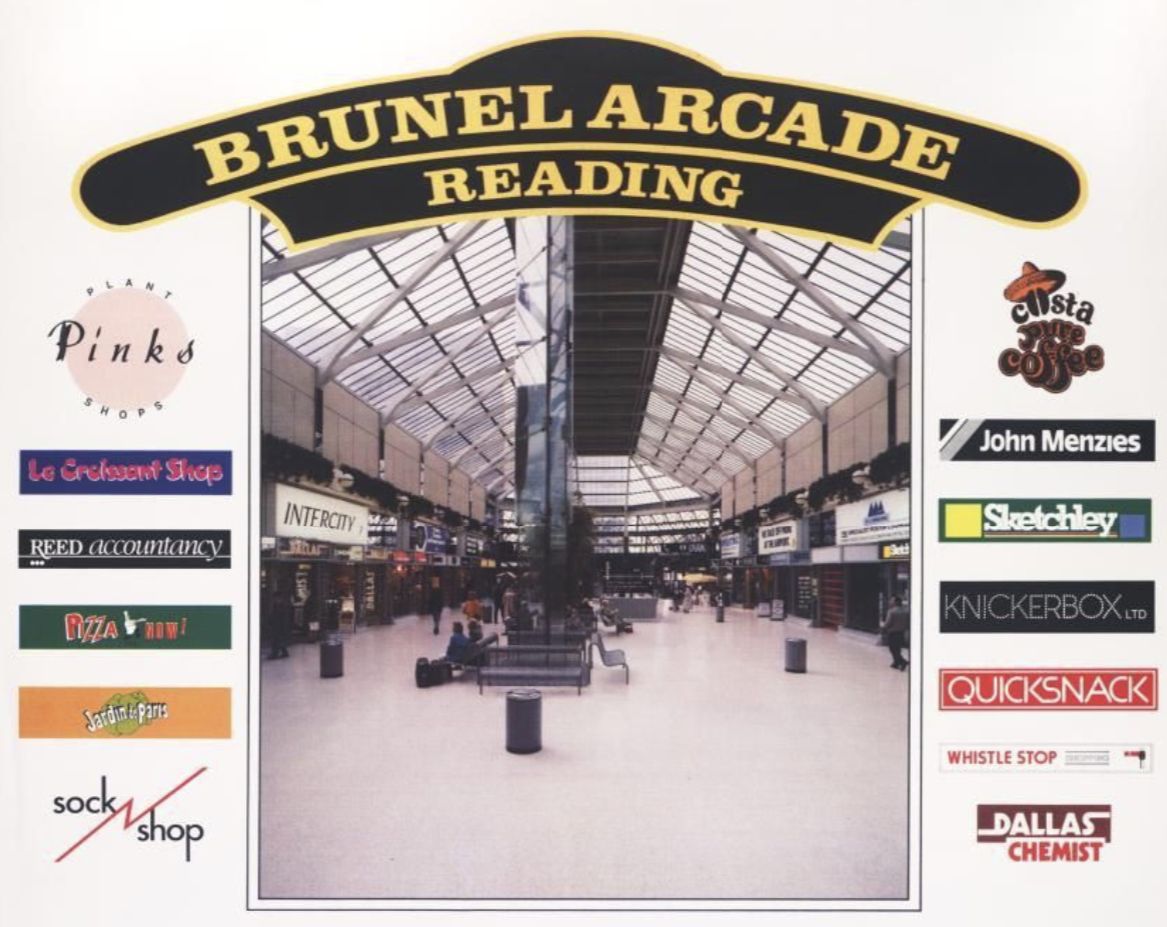
The documents give some updates on potential schemes being worked up in the background. Firstly, it appears that Brunel Arcade, the old scaffolding-inspired station concourse could be on its way out:
“Network Rail and our partners are working up proposals to take forward a high density mixed
use redevelopment scheme, including station and public realm enhancements with baseline technical evidence gathering and master planning work currently underway.”
The local NHS organisations are already on the case here, although they’ve submitted the same comments on most of the town centre development sites:
“an appropriate and proportionate mitigation measure should be provided and to ensure that there is adequate primary healthcare provision to accommodate the population growth of this area. Given the strategic location of this opportunity area, the ICB considers that there may be an opportunity to provide a fitted-out facility for relocation of the existing GP practices within the town centre”
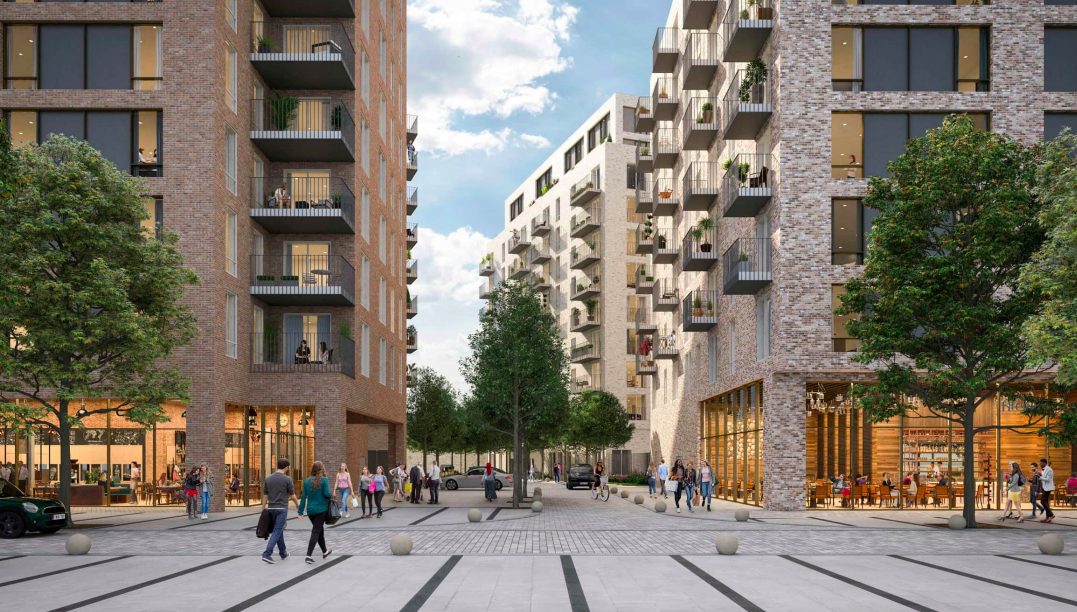
The other side of the station, it emerges that the old sorting office site is now in the hands of a developer called Moda Living, who operate a number of residential schemes around the country. Their submissions include an enthusiastic backing for co-living, a concept I covered recently.
“Moda strongly supports the creation of Co-Living accommodation. Provision of a communal model that increases opportunity for social activity and reduces housing costs within a managed environment can form part of a wider portfolio of housing products available to Reading. It is considered that support for Co-Living will increase housing delivery, provide more affordable housing options to address need, can reduce viability constraints on larger housing schemes and help create vibrant centres”
However, Moda uses further responses to try to persuade the council to let it replace proposed ground floor small retail and leisure with wall-to-wall residential use, to which the council thankfully rejects:
“residential on ground floors will only be appropriate away from the key frontages that require activation”
We conclude that a new planning application is on its way for the old sorting office. Meanwhile, at the adjacent Aldi site, owners Aviva make further comments implying possible amendments, although it could be their comments came before they won their appeal for their outline scheme. Now they seem to be back on the topic of links to the river, philosophising the definition of ‘direct’ by questioning:
“…whether a visual link should specifically be required and whether the link needs to be direct and whether ‘direct’ means that it should be straight. With appropriate design and wayfinding signage, it is possible to clearly define a route, without the need for this to include a visual connection or for the route to be straight.”
The council responds with exasperation:
“it is vital to the function of the link that visual links are provided along as much of the link as possible, without specifying specific start and end points.”
The whole topic of the intended new pedestrian route from the station to the river through multiple regeneration projects has been at the centre of constant bickering as developers seek to optimise their rectangular blocks. They should have just clubbed together to hire Brian Cox to record them a joint submission, perhaps musing skywards: “In a universe of curved spacetime, is there meaning behind the term straight line? Can light ever take a direct path between two points? Can two points ever both be defined simultaneously in a meaningful way? Can a visual link ever transcend the momentary existence of a single photon?”
It’s all a bit beyond parody now. I agreed with the endeavour, but it’s maybe time to just build the flats and we’ll find our own way to the station.
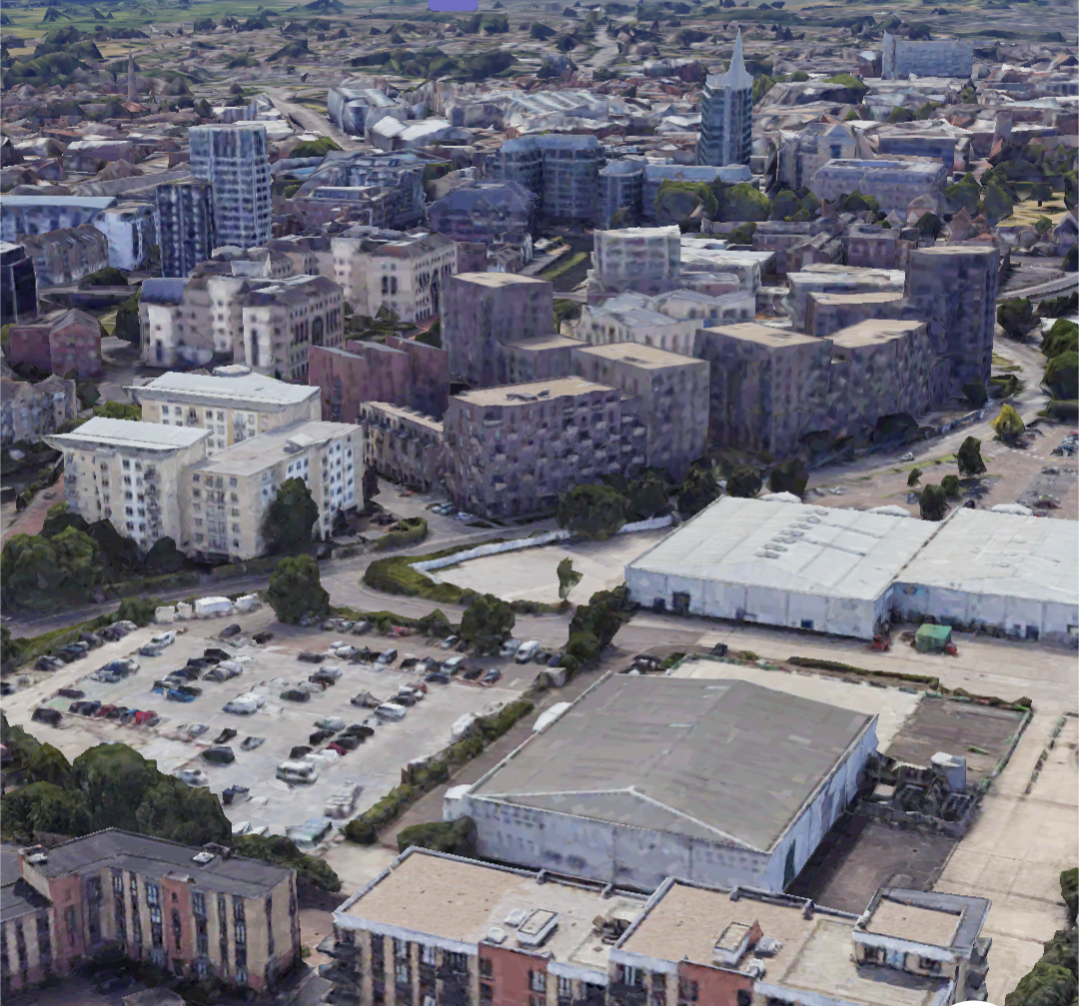
Agents acting on behalf of the owners of the vacant site behind Decathlon appear within the correspondence. Their challenge on scale is upheld by the council, who agree that:
“the Site has the potential to deliver in the order of 430 – 450 dwellings in a mix of open market, affordable and Build to Rent (BTR) units. The new units could be arranged in 4 blocks of development ranging from 4 to 9 storeys in height.”
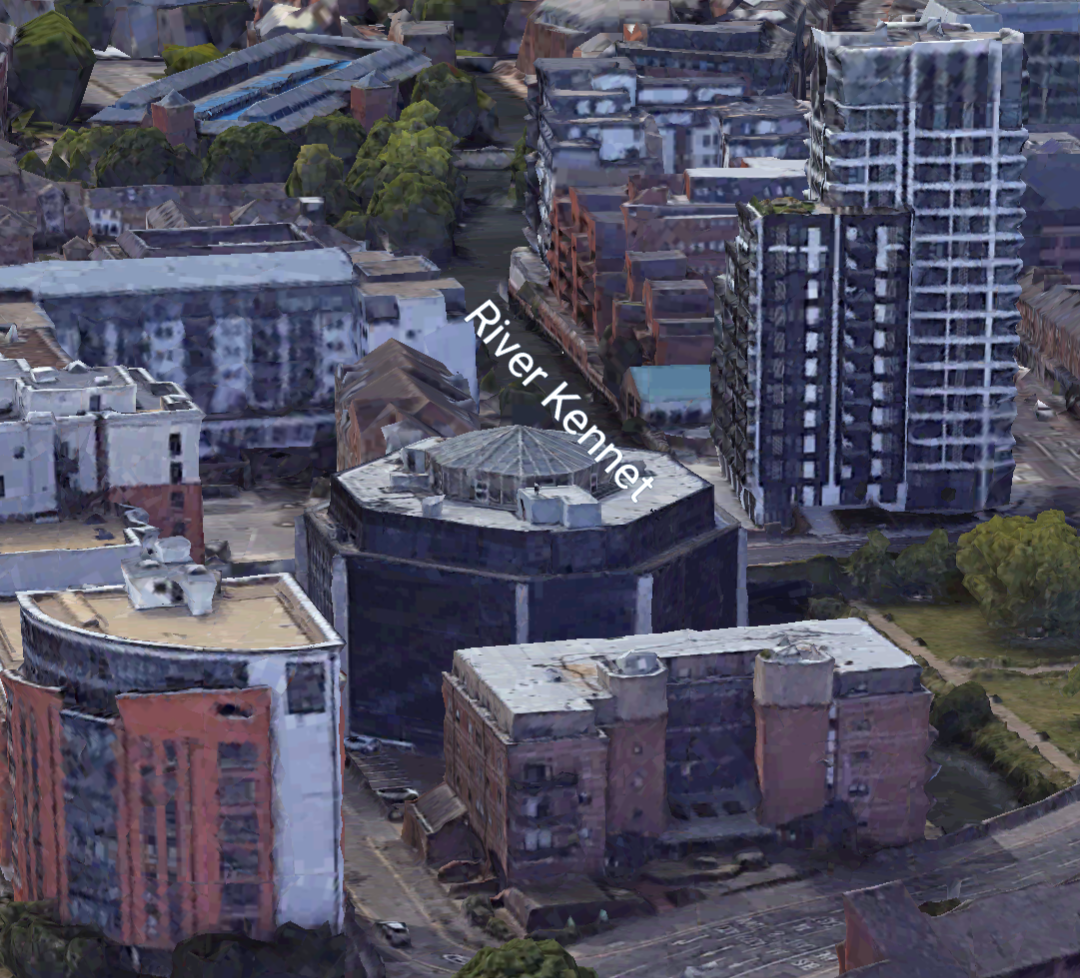
Further details of a project at Sapphire House/Royal Court are divulged from the drawing board:
“…the proposed scheme comprises Build to Rent (BTR) and Co-living accommodation. In this manner, a scheme of 321 dwellings is proposed, alongside 725m2 (NIA) of non-residential uses. Within the residential accommodation, a tenure-blind scheme would come forward to provide affordable housing in line with policy expectations.
The ground floor plan identifies how it is intended to locate residential and non-residential uses alongside intervening spaces. It is considered that the approach will maximise activity and surveillance around the site, which is one of the current disadvantages with the layout of buildings and spaces. In this regard consideration is also being given to linking the site directly to the Public Open Space opposite and the Council’s views are therefore welcomed.
It is currently proposed to provide a split of accommodation, with BTR and Co-living currently favoured. The buildings, however, can be developed in a number of ways, including traditional Private for Sale and Affordable Housing, full BTR or full Co-living. The dual-accommodation BTR/Co-living scheme is proposed for the reasons highlighted above, particularly the benefit that could be afforded to key workers from Royal Berkshire Hospital and those on lower incomes with a desire to live close to Reading’s town centre.”
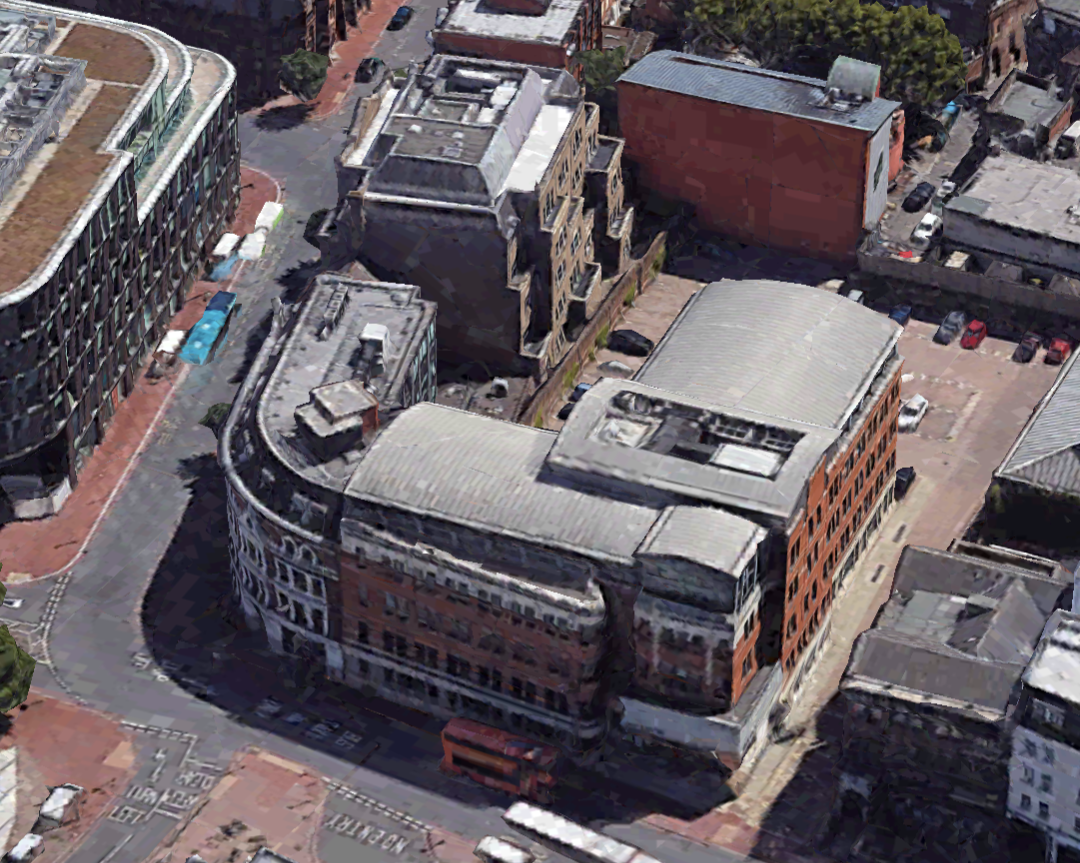
The owners of Aquis House are looking to redevelop an L-shaped plot to maximise the potential of the open car park behind. Their proposed allocation for a 10 to 15 storey building has not gone down well with Historic England. The council seems to be hedging its bets:
“Regarding a tall building, Aquis House immediately adjoins a conservation area and 33 Blagrave Street is within one, and both are in close proximity to a number of listed buildings. It is considered highly unlikely that the sites will be suitable for significant increase in height over the existing buildings. Nevertheless, the proposed allocations do not place any specific limits on height, with this needing to be decided through the development management process.”
Other sites to crop up within the town centre include the legendary Samuel Smith’s site variously known as The Lower Ship or Horse and Barge on Duke Street. The long-empty property is being put forward by the brewery for conversion and extensions to provide 30 flats. The council approves of the concept.
The Oracle also features. It fails to get its site added to the tall building zone, but does achieve a new designation of “area of less potential for tall buildings”, which does keep the door ajar for its submitted scheme at the former Debenham’s to yet be approved, despite a recent objection from Historic England. Although nothing should be allowed until they fix all the parking ticket machines.
South Reading
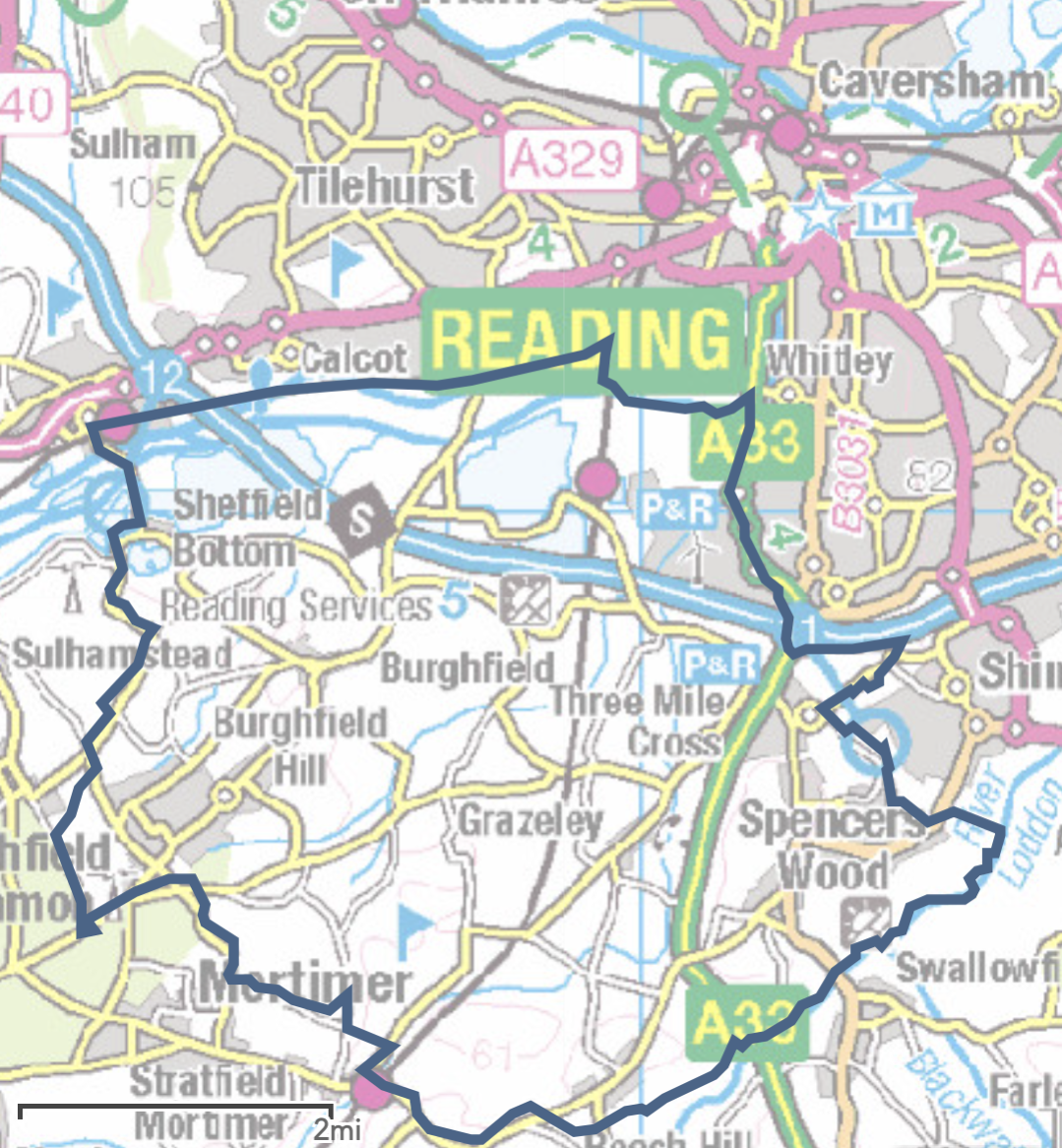
To the south of Reading, the Atomic Weapons Establishment (AWE) has recently had the ominously-named “Detailed emergency planning zone” (DEPZ) around its Burghfield site expanded. This put paid to the proposed 15,000-home Grazeley new town south of the motorway. AWE has submitted some stern comments to the council vetoing any new development across the enlarged protected area that now includes Green Park.
“It is notable that the risks not only apply to any new population but also to existing populations, where the burden of managing existing residents and workers would come under more pressure if new housing and development increased populations and complexity. The Appendix to this letter shows how most recent appeals, even for single dwellings, have been dismissed. AWE/MOD consider that additional residential and other population generating development within the DEPZ poses a significant potential threat to the nation’s security.”
“The revised Local Plan should not allocate land (nor carry over existing allocations) for housing or other uses which increases the population within the DEPZ (including significant employment development or the enlargement of the Madejski Stadium for example).”
Clearly the change to the DEPZ has left landowners high and dry. Their submissions – from the likes of Crest Nicolson and St Edward Homes read like a whiney Mrs Doyle-esque “Ah go on, go on…” but the council clearly has no choice but to hold firm:
“Whatever way the DEPZ was originally defined, the fact remains that its boundaries now include those parts of Reading identified. Should an incident take place at AWE Burghfield, this will require a comprehensive emergency response”
The council has attempted to counter the AWE argument that existing permissions around the stadium should be refused, but if a single extra home constitutes a threat to national security, you have to presume that AWE could throw their weight around and block the Royal Elm Park scheme should it ever reemerge. Could they even try to stop empty offices from being re-occupied? If Reading FC were ever to see a return to the glory days, it would seem they might need to relocate should they require a larger or more commercially diverse stadium complex.
In the meeting, councillors celebrated the additional jobs that AWE is bringing to the area. I think this is the wrong line. The council should now be campaigning for the closure or relocation of the Burghfield site. I’m in no hurry to see green fields developed, but if populations are going to increase as they have been then the Grazeley site on the edge of an existing major urban area, near the motorway, train line, and fast bus links to town would surely have been the best way to accommodate housing pressures, especially given the relatively low level of local opposition. Now it seems that the future expansion areas of Green Park will never happen, and the stadium site is also locked down. AWE warns in its submission, of possible future changes to the DEPZ, presumably further expansion. At some stage the council is going to need to turn against AWE.
West Reading
The majority of consultation responses were from landowners and developers. The feedback from individual residents was almost universally in relation to a single site at Kentwood Hill in Tilehurst. Organised action has worked, and aided by the discovery of badgers, the council agreed to update its policy:
“It is proposed to remove approximately 0.46 ha of the areas of greatest sensitivity from the Land at Kentwood Hill allocation and to add it to the Local Green Space designation, which includes those areas of greatest importance for wildlife”
In the council meeting, councillors from multiple parties spoke of defending Kentwood Hill, and it was probably the dominant theme from the councillor debate on the whole plan update.
East Reading
The main story in East Reading is the hospital. But the council deems its potential relocation out of scope of the current planning process.
“The Hospital is not owned by RBC and its sale is beyond the scope of planning policy. Should RBH move elsewhere, there is a strong preference from the Council for the site to continue to meet healthcare needs albeit with some flexibility.”
There is no allocation proposed for the Morgan Road playing fields, but that doesn’t mean a planning application cannot be submitted.
Caversham / Emmer Green
Referring back to the diagram at the top of the article, you can see that the small areas north and north-east of Reading are the only ones not protected by flood plain, landscape designation, or the emergency planning zone discussed earlier. Gladman, who tried and failed for a development on the edge of Emmer Green is back again:
“A vision document promoting the sustainable development opportunity North of Reading accompanies this representation at Appendix 1 (document titled ‘Play Hatch & Emmer Green, Creating sustainable communities, A vision for land north of Reading’ which was also submitted alongside representation).”
I contacted the council asking whether that document could also be published but had no response.
The former Reading golf course is also being looked at for further expansion of the housing scheme under construction:
“…the golf course within Reading Borough subsequently received planning permission for up to 223 dwellings. These homes are being constructed by Vistry. The part of the former Golf Club south of Cucumber Wood has been promoted to South Oxfordshire District as a location for residential development. Given the acceptability by Reading of its section of the former Golf Club, through these representations to land in South Oxfordshire District is being advanced to contribute towards addressing the unresolved needs of Reading Borough. As the land at the former Golf Club is amongst the nearest areas to Reading station outside of the Borough, this is an illustration of its sustainability.
…Proposals have been designed to respect and respond to the existing ecological features of
the site such as the trees and hedgerows alongside levels, as well as the relationship of the development to the surrounding built context and settlement edge. Residential density is proposed at an average of 29 dph (dwellings per hectare) (net) which would enable around 100 dwellings to be delivered on the 5 ha site. This density is considered appropriate to reflect a transition from Reading into South Oxfordshire, in the context of the surrounding residential development along Soane End, Highdown Hill Road, Crawshaw Drive and Kidmore End Road. The proposals highlight the opportunity for a key new pedestrian and cycle route across the site providing significant new public open spaces, recreation spaces, parkland and ecological enhancement.”
The council isn’t interested. It simply states that all these proposals will be a matter for Oxfordshire. Talking of whom, needless to say we have representations from Oxfordshire and South Oxfordshire opposing the idea of a new Thames bridge. Fear of needing to accept that a bridge is necessary will mean Oxfordshire continues to resist any housing that constitutes an expansion of Reading. And equally, fear of the expansion of Reading becoming viable will mean they continue to oppose the bridge. Therefore, none of the above proposals north of the river are likely to happen, for at least as long as Oxfordshire can still deliver its government housing targets in Didcot instead.
In summary, all roads point to the town centre, where we can avoid roads altogether and get everyone onto the train instead – or off it if they’ve moved to Didcot to commute in from there. The council is increasing the proportion of 3-bed homes required within apartment schemes to 15% to compensate for the absence of suitable land for houses more locally. Whether families are prepared to go for that proposition remains to be seen. Otherwise, for many Reading might have run out of road.
 Reading-on-Thames
The station shopping parade renovation will be welcome. It will make it a safer area (hopefully) and also make it a welcoming impression for those getting off the train to Reading for the first time.
I like the pun “all roads lead to” in the final paragraph, unfortunately, the council need to think about the road situation as the roads in central get congested.
Whilst I know this is a Reading blog post, for me I feel Wokingham Council have a role to play and need to increase development in there area. Residents of Hurst are an arrogant bunch and having more development on brownfield sites in there neck of the woods would ease the pressure on Reading.
LikeLiked by 1 person
Wokingham has accommodated a vast amount of development in fairness.
Fingers crossed you’re right about the Brunel Arcade plans – I’m very curious to see what they’re planning
LikeLike
Shame about the AWE DEPZ expansion. In my mind, Green Park would be the ideal location for a new Hospital considering there’s already a new station there to serve it. The whole point of that station was to serve a growing employment/populated area. I can see it being deserted for ever more now.
LikeLiked by 1 person
I went to a meeting regarding the hospital and was told that it was “built on land that was gifted under the covenant that it could only be used for healthcare purposes”. Is that right? If so the land would revert to the descendants of those that gifted the land (the local MP’s family, Benyon maybe?) and would be free to redevelop as they saw fit (within planning constraints).
LikeLike
That’s interesting – haven’t heard that. Hopefully they can get money from government to do something, whether that be the relocation or rebuild.
LikeLike
I assume there was no mention of the orbital road around Caversham due to the fact the third bridge wasn’t looking promising? It was only mentioned once in a local plan.
LikeLike
Would generally be supportive of increasing density in the town centre, perhaps it’s worth giving incentives to build family sized apartments, 3-4 bedroom units which might generally have lower demand but would accommodate the demand that can’t be met by suburbia. Seems not to be a priority at the moment but perhaps something like increasing the permitted sizes if family housing is increased might help.
There’s still an enormous amount of semi-industrial low rise between Richfield avenue and the train line that’s very close to the centre of town that could be developed too.
On the subject of the route to the station, is there any chance of getting a campaign going to reduce the width of Vastern Road? 5/6 lanes wide gives it a very high design speed, people race down it all the time, it’s far far more than is required and it makes it much more risky for pedestrians, requiring longer signal times at the crossings (increasing delays for everyone…). Taking a lane out either direction wouldn’t impact much on travel times or queueing, but would create a much more pleasant environment, slow traffic and would help people get to the station faster.
In fact, there might be potential for making it a mixed street and doing away with the traffic lights altogether if you reduce the design speed enough…
That could free up enough space for pop up kiosks or other small businesses to support the (rapidly) growing local population, especially by the large bike racks and in front of the old SSE site.
LikeLiked by 1 person
I hope RBC will require that any redevelopment of Brunel Arcade includes expanded provision for buses. The bus interchange on the north side of the station is barely used, but meanwhile the town centre streets are becoming saturated with buses sitting at or waiting to reach their termini.
I suggest that two inter-related changes are needed. More bus routes should be cross-town, in particular, a route linking Emmer Green with the Whiteknights campus via the station and the hospital is needed. Second, more routes should pass through Blagrave Street (but not terminate there) to make both bus-train and bus-bus interchanges easier and shorter.
Repurposing a slice of Brunel Arcade’s ground floor for a bus hub (not a terminus) would help to achieve this.
LikeLiked by 1 person
Well, it’s a drawing board I’d be intrigued to see. You’d hope they’d do something. If they flattened the lot then a bigger underground section including where railair currently departs could allow the coach service to be based underground. That could create space for a few extra bus stops above.
LikeLike
I had hoped that the Mail sorting building could be turned into a Bus terminal .. The town is a Active travel nightmare .. and frankly beocming worse each month. The Council needs to decide if it will actually get behind car share schemes and cycling .. or just give in to the Petrolheads … because right now its not serving anyone..
LikeLike
there’s certainly been an increase in bus services/frequencies in recent months, which is welcome. I’m not sure a bus station north of the station would prove that appealing for passengers.
LikeLike
Problem with that location would be that it’s on the wrong sides of the tracks, you’d have to route all of the buses through the pinch points under the tracks. It’s an identical problem to getting over the river, not enough routes through.
A complete lack of intercity buses (besides the extortionate RailAir bus) is a major issue for Reading, but north of the train line is the wrong place for it.
The Fobury Retail Park would make more sense, albeit you’ve got the oversized Fobury Road in front of it. Taking a lane out in each direction wouldn’t make a tack of difference to traffic there and make it substantially safer to cross for people going into town.
The best place to put it would have been where it was before, under the current Station Hill development, but that ship has sailed…
LikeLiked by 1 person
[…] Reading Local Plan Update […]
LikeLike
The current nuclear warhead stockpile will be replaced in the 2030s, and likely increased by 40%. It would be great if we could all get along, stop wasting money on this useless phallic extravagance, and then the DEPZ need not exist. We’d get the houses we desperately need.
LikeLiked by 1 person
Those expansions to the AWE emergency zones are wild. I have always been surprised the factories were sited in southeast England.
I suspect the expansion of the zones is related to the new warheads that will begin manufacturing soon. Probably was a risk assessment and that resulted in the expansion. Quite astonishing that’s resulted in Green Park being frozen. The main risk is probably a significant leak of tritium gas, with the size of the zone related to its dispersal.
The warheads they make (and overhaul; that’s their main work) are only the size of a traffic cone. Each has the explosive power of about 100,000 tonnes of TNT. Sobering stuff.
LikeLiked by 1 person
Test
LikeLike