
Today’s consultation write-up relates to a plan for 257 co-living units in a redevelopment of Greyfriars House. More significant than the proposed building itself is the new type of accommodation it would provide: Reading’s first* purpose-built co-living scheme. The planning exhibition gave me the chance to ask a few questions, so here’s what I made of it…
I worked in this building for a single day many moons ago, during a summer spent temping between years away at university. My agent had sent me to do data entry. It was supposed to be a few days but soon after arriving she messaged saying my previous place now wanted me back – I can’t recall why, to create them another spreadsheet macro or something. The data entry was dull so I confirmed via elicit under-desk SMS on my Nokia 3210 “yes, get me out”. I felt like a spy behind enemy lines. “Say nothing, see out the day” was the instruction. I countered that a lady was spending hours showing me what to do. “Just say nothing – I’ll take care of it”. By that I presume they would just send a different temp tomorrow, rather than have an assassin waiting for her in the underground carpark. Either way I never went back, and I’ve got no particular recollection of the building, but clearly just enough guilt to remember the story.

The proposal for this building brings back echoes of university halls. The idea is to have small rooms akin to studio apartments, supplemented by more generous communal living spaces, including larger kitchens, lounges, desk-working areas, multiple outdoor terraces, a gym and yoga studio. It would create a more sociable community attractive particularly to younger people.
Perhaps we should treat this latest buzzword “co-living” with some caution. After all, property folk have form with re-framing negatives. A home described as “airy” is probably a single-glazed candidate for an ice house; beware the “up and coming neighbourhood”. And their thesaurus-worthy list of synonyms for small: compact, cosy, bijou, well-proportioned, quirky, characterful, and the classic “low maintenance garden”. Is “sociable” just estate agent corollary for “rammed in like sardines”?
The architect at the exhibition spoke to me on the topic. He said, “the trouble with a two-bedroom apartment is that people tend to go home and then stay in”. I can see where he’s coming from regarding social isolation, and that’s clearly a genuine issue in modern life generally. But I’m slightly bewildered by the starting point that a home sufficiently comfortable that a resident might choose to spend time within it constitutes a problem that needs to be resolved. Why can’t we have sociable spaces and also old-fashioned concepts like a separate bedroom? The truthful answer is cost. The co-living concept comes at a discount of somewhere between 10% and 30%, relative to the now-conventional build-to-rent apartment accommodation.
Clearly we have a crisis in housing, and as a solution, additional supply is the only show in town. Expanding suburbia is incredibly unpopular with residents and environmental campaigners alike; building taller angers heritage groups. But I’d favour both of these levers over this new alternative approach of the ever-shrinking home: it feels something of a race to the bottom. The architect insisted that this emerging proposition of co-living is proving incredibly popular with tenants, a view echoed by another local property expert I consulted. Brands like “The Collective” are seeing huge demand in London, with all-inclusive billing, cleaning options, and great on-site facilities all adding to the appeal.

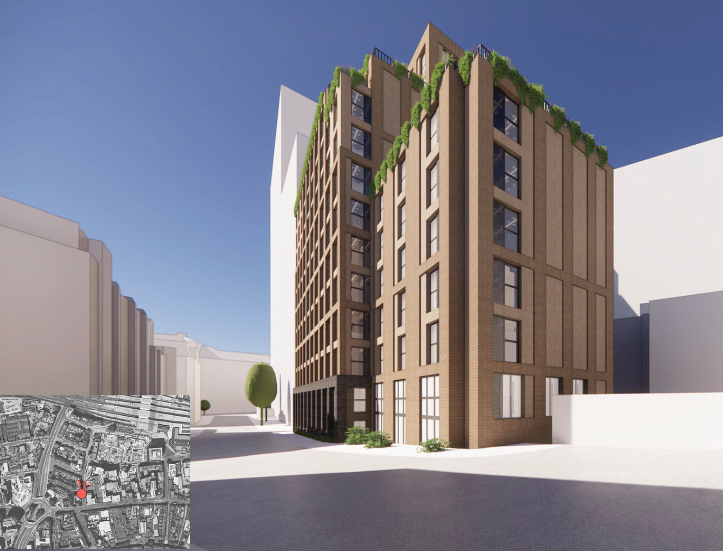
The proposed building itself is inoffensive. Brick dominates, in keeping with the area, and the separation of the lower floors persists through varied colouring. The environmentalist argument might be that the existing building should be retrofitted. It was explained to me that this was logistically difficult here, but was considered in depth. It would have been as costly as a rebuild, less energy efficient, and fail to maximise the potential of the site. And I struggle to see an aesthetic argument to retain the incumbent – I photographed it on a perfect day, applied all the filters and more vignette than a Top Gear special yet it’s still uninspiring.
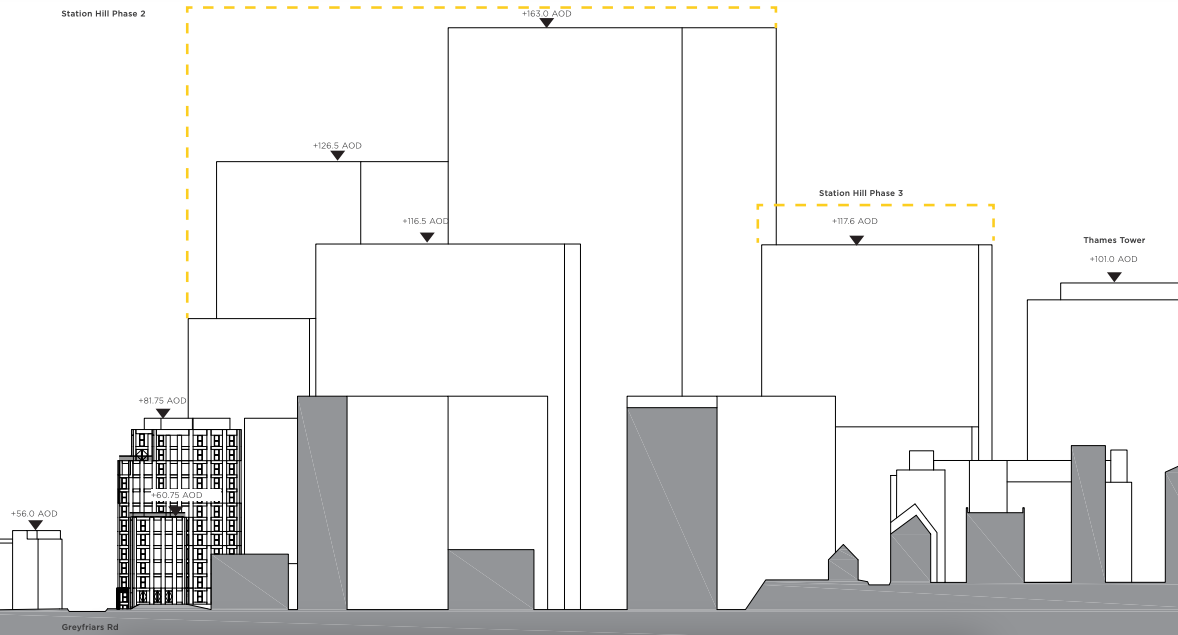
I pushed on whether they could go higher than the adjacent newly built Friar’s Walk rebuild, especially given the council is apparently supportive of statement corner buildings. The answer was that the plot was small and increased demands on ground floor space – bike storage, resident amenities etc – would make a taller development challenging. The planning consultant agreed that 12 storeys was about right for the site.
I’m inclined to summarise that short of restructuring the national approach to planning, we need to embrace this new concept and try it out. Ultimately, it provides a new choice to renters, and will also contribute a proportion of units for subsidised rent for key workers. And it’s no bad thing bringing more younger people into the town centre to live. The architect did try to convince me that the offer was attractive to older age groups too. But he produced a pie chart analysing existing developments that showed an aged 50+ segment as pretty much just a line, and the 40 to 50 slice would disintegrate in front of you if you tried to cut it on an actual pie. There was a meaningful sub 29 cohort – perhaps that’s what he meant by older age groups? I need to come to terms with the fact that when I was in their target demographic I was, well, writing spreadsheet macros and playing snake on a Nokia. When it comes to co-living, it seems I need to move with the times, as does Greyfriars House.
What do you think? As always, comments very welcome. You can see all the details of the consultation yourself here, and respond to them directly ahead of the submission of a planning application.
* The Soane Point development in Market Place is essentially also co-living, but it is a conversion rather than a purpose-built scheme. Also, it’s stalled mid-construction due to the main contractor going under. One other new co-living scheme on the edge of the town centre is rumoured to be in the early stages of planning.
 Reading-on-Thames
It does seem odd to create housing that people won’t want to spend extended periods of time in, to encourage them to be more social in shared spaces so soon after a global pandemic that forced many to stay at home in private 24/7. It all comes down to money in the end and smaller apartments means more apartments.
LikeLiked by 1 person
Sounds pretty dystopian to me. If it won’t sell to older people, why should younger people have to settle for eternity in what sounds like university halls when I was there in 1997. It wasn’t great! This is not a solution to the housing crisis….
LikeLiked by 1 person
as the parent of a young adult with some additional not going to university but wanting independence there are some advantages.
inclusive billing and a cleaner makes a transition from living at home to independence.
LikeLiked by 1 person
Don’have a problem with this – isn’t it just essentially an HMO albeit on a far larger scale. If it accelrrates the trend of existing HMO’s being converted back to family homes all to the good.
LikeLiked by 1 person
Some of my best times as a 20-something were spent in house shares. None of the houses we lived in were purpose-built HMOs, though, so there were always awkward questions about “who gets the tiny loft bedroom”, or scheduling our cooking time in the cramped galley kitchen. I don’t see the harm in formalising the shared-living principle through proper design. I think many young people will welcome this development.
LikeLiked by 1 person
Thanks for sharing. Good points.
LikeLike
I was pretty cynical of co-living, but friends of mine moved into a new such block in Exeter and they like it (especially the kitchen being cleaned for them 😄). So I’d give it a chance.
Interesting to read how the ground floor area dictated the height.
LikeLiked by 1 person
I could see it appealing to the divorced dad market.
It’s effectively hundreds of bedsits. Bedsits have their place in the housing market, certainly at the low end.
LikeLike
They had another pie chart showing that co-living was actually favoured more by women.
LikeLike
If it gets people out of the many sub standard HMOs around town and gets those back on the market as houses then that might depress house prices a tad (??) and open up the housing market desperate to get in houses. Also the point that has been made to us several times during the consultation meetings we had with the team was that not only are they aiming to deliver the 30% affordable criteria but that the rents would be adjusted to the sector of business people worked in .. e.g. nurses etc. So it seems they are aiming to do better than a heavily caveated “affordable”. Generally, subject to the earlier point, rents 20% lower than Ebb and Flow .. expensive but popular.
LikeLiked by 1 person
great point about potentially seeing HMOs freed up.
LikeLike
Think its a fantastic idea, creates a nice community that many people want when moving to a new city (town).
LikeLike
Sounds like a great idea to me, many people wish to live in a community rather than soulless tower blocks. Especially good for people moving to a new city and wanting to meet new friends.
LikeLiked by 1 person
True, and they did say tenancies would be shorter, which would appeal to someone new to the area finding their feet and meeting people.
LikeLike
The key is the quality of the shared spaces and facilities. If those are genuinely nice places to be, and there are enough of them for most residents to use them most days, then (for a single person or couple without kids) those can easily outweigh the value of a second bedroom. I would be interested.
On the other hand, if they’re just trying to market one-bedroom flats within a building that’s no different to any other, it’s a race to the bottom.
LikeLiked by 1 person
[…] Greyfriars Road: Co-Living makes its debut […]
LikeLike
I wonder how many of these ‘anonymous’ comments are being left by the developers and their political consultants themselves.
LikeLike
It’s probable some are. I use the default comments capability in WordPress. I figure allowing comments is still helpful as it enables a discussion.
LikeLike
[…] that the council is anti-development. They just approved the first co-living scheme – even I voiced concerns on the small unit sizes. Equally, the generation-long Station Hill delays cannot really be pinned […]
LikeLike