
The latest flurry of development news in Reading has focussed on new apartment schemes. It prompts constant debate, so it feels like a good time to make the case, perhaps controversially to some, that this is the right direction of travel for the town.
The scheme to replace the two-storey offices along Napier Road has been submitted. Totalling 576 apartments, the new buildings would form a continuation of the lower section of the Thames Quarter development at the Reading Station end.
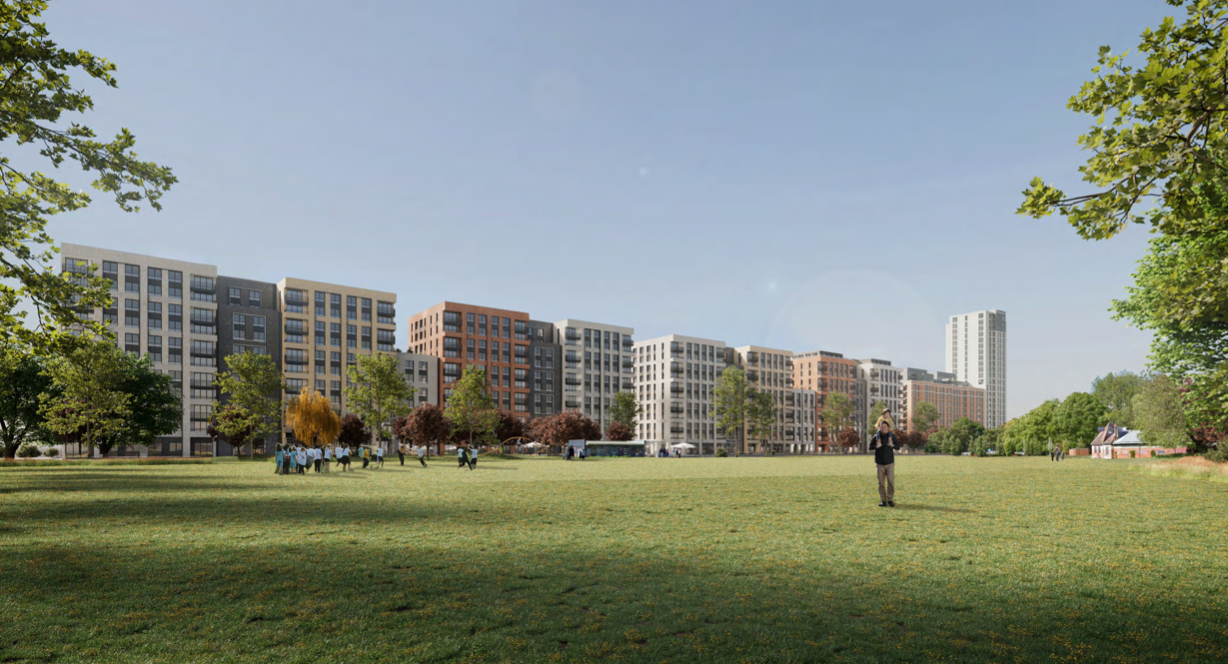
Feedback on these numerous apartment schemes, based on what I see on social media, is mixed. Some is supportive, but there are six main negative arguments that keep cropping up, which I think are overplayed. Taking each in turn…
Firstly, “blocks of flats look ugly”. Well, do they really look any worse than the buildings they replace? Almost always it is empty, dated offices making way, and I’d argue the modern apartments improve the outlook. Would you rather the view above stay as vacant commercial premises, a railway embankment and overhead power cabling?
“They should just convert office buildings”. Maybe in some cases, but often that leads to inferior accommodation, poor energy efficiency and lower numbers of units. That’s a problem if you believe there’s a need for housing – we’ll return to this.
“They all look the same.” I agree the architecture could be more ambitious, distinctive and attractive. But how about the swathes of near-identical terraced housing surrounding the town centre? Nobody seems bored with that – we’ve turned most of it into conservation areas to prevent anyone touching it.
“There aren’t enough doctors and teachers.” Unless the availability of new apartments in Reading directly leads to the decision of an oversees individual to immigrate, then it must already be the case that there aren’t enough key workers to serve a wider population within the region or country. Or if there are enough then it’s a logistical issue of having the right people in the right places to serve the need. Many apartment schemes offer ground floor space to the health authorities for new facilities should they require them.
“Traffic!” Most of these new developments have minimal parking allocations, and street parking in the vicinity is either non-existent or protected for existing residents through permits, so tenants largely don’t bring cars. Most developments cause less traffic than the former offices did in their prime of full occupancy and 9-to-5 commuting. We should still connect up Napier Road to Thames Valley Park, but that was rejected due to the need to dig up a ribbon of scrubland that was subsequently removed anyway to bury electric cabling.
Finally, “we need houses not flats”. I think it’s a false assumption that we have a family of four somewhere that will inevitably move into the very next new home to be built, whether that be a suburban family home or a 1-bed apartment in town. Clearly that’s not the case. The availability of a new apartment may tempt a person/a couple considering renting/buying a Victorian terrace, which is now freed up should they take the flat. Played out over a market of thousands of people and thousands of homes in a wider region, new apartments add supply and improve the supply/demand ratio, marginally helping with the affordability of not just the flats but all the housing that exists in the same overall market, rippling right the way through the chain. That’s even the case if the specific new flats are priced at a premium themselves. It’s still additional supply. I accept we need more social housing, but that’s not an argument against building flats on brownfield central sites.
Why labour these points? In short, I think the current rapid expansion of town centre living is broadly working. Obsolete space is being repurposed relatively quickly, avoiding an appearance of decay. Homes are being provided to at least attempt to keep pace with demand. The town centre, supported by its growing local population, is doing relatively well given challenging wider conditions; new shops and restaurants open at roughly the same rate that others close – and that compares pretty favourably to most towns. Newer fit-for-purpose offices are retaining job opportunities in the town centre, and some new leisure and cultural facilities are on their way.
I sense that local politicians are under pressure from residents to turn down further apartments. Very recently we saw the rejection of plans for 120 flats at Eaton Court, a derelict low-rise office and car park off Oxford Road.
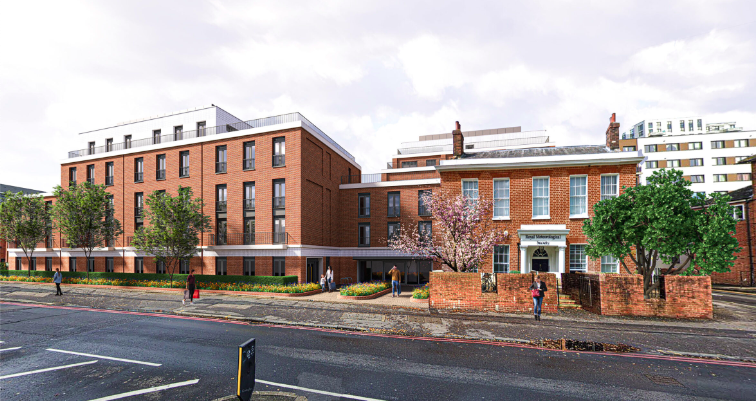
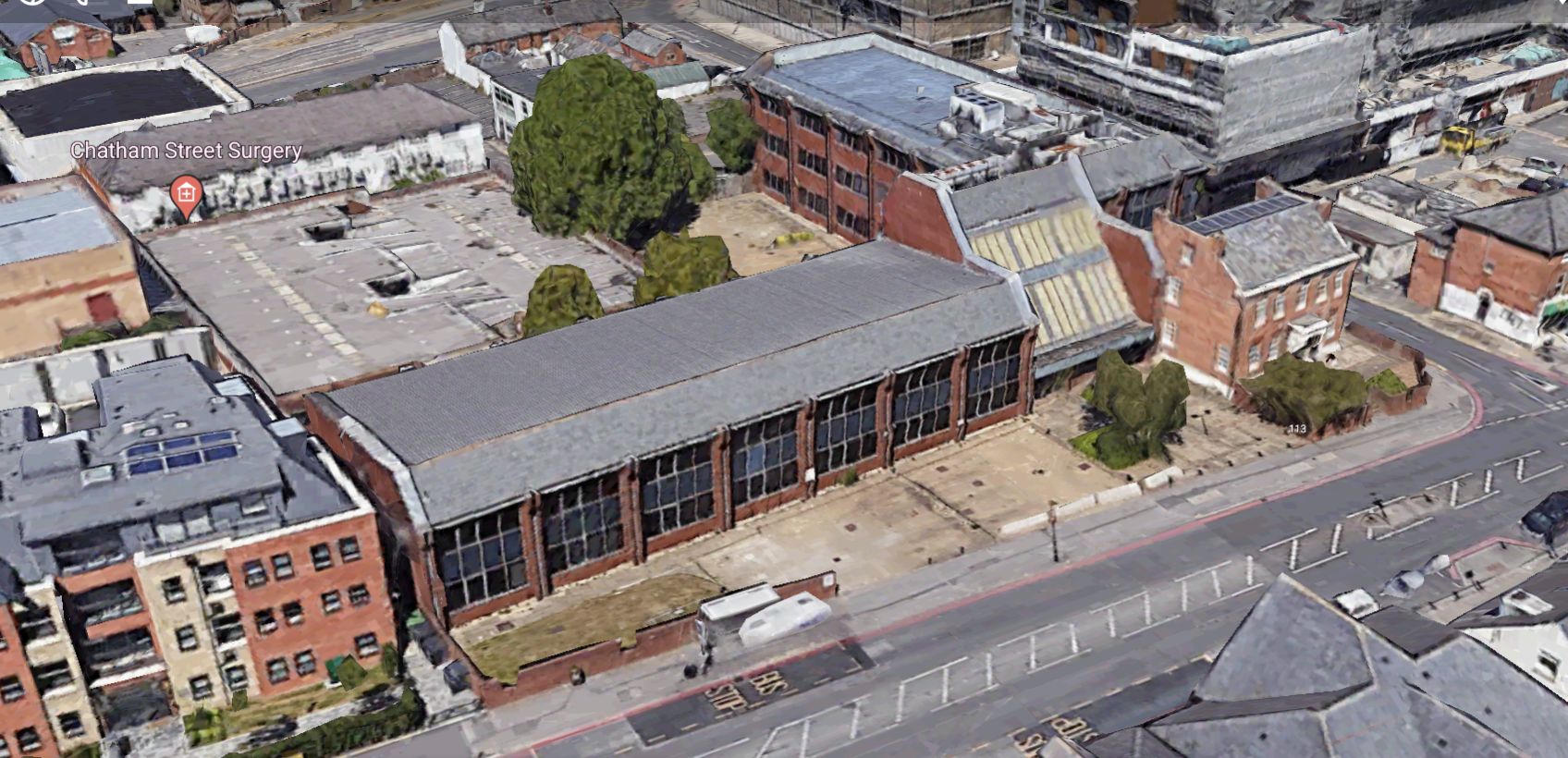
The principle reason for rejection was the impact on the Meteorological Society building (right, above). It used to be the case that a heritage objection came if it was proposed to demolish. Then it was perhaps if the historic building was retained but with a colossal out-of-place monolith proposed next door. But here, the new block is designed of sensitive scale, recessed next to the older building to allow it more space, and yet we have a rejection. Apparently, the view of the side of the retained heritage building would be obscured from distance. This is because the developer simply wants to straighten out the building line you can see above that slants backwards with the derelict office.
Watch the three minutes of the committee from this bookmark onwards to hear the argument set out in full*. I sense the determination to find red-tape reasons to reject apartment schemes, given their perceived unpopularity. Can we really afford to turn down these sorts of regeneration projects? Can we afford to spend more money defending planning appeals that might be lost? For this scheme, the planning department recommended its approval, having spent years assessing it and working with the applicant on revisions, including having reduced it in scale already.
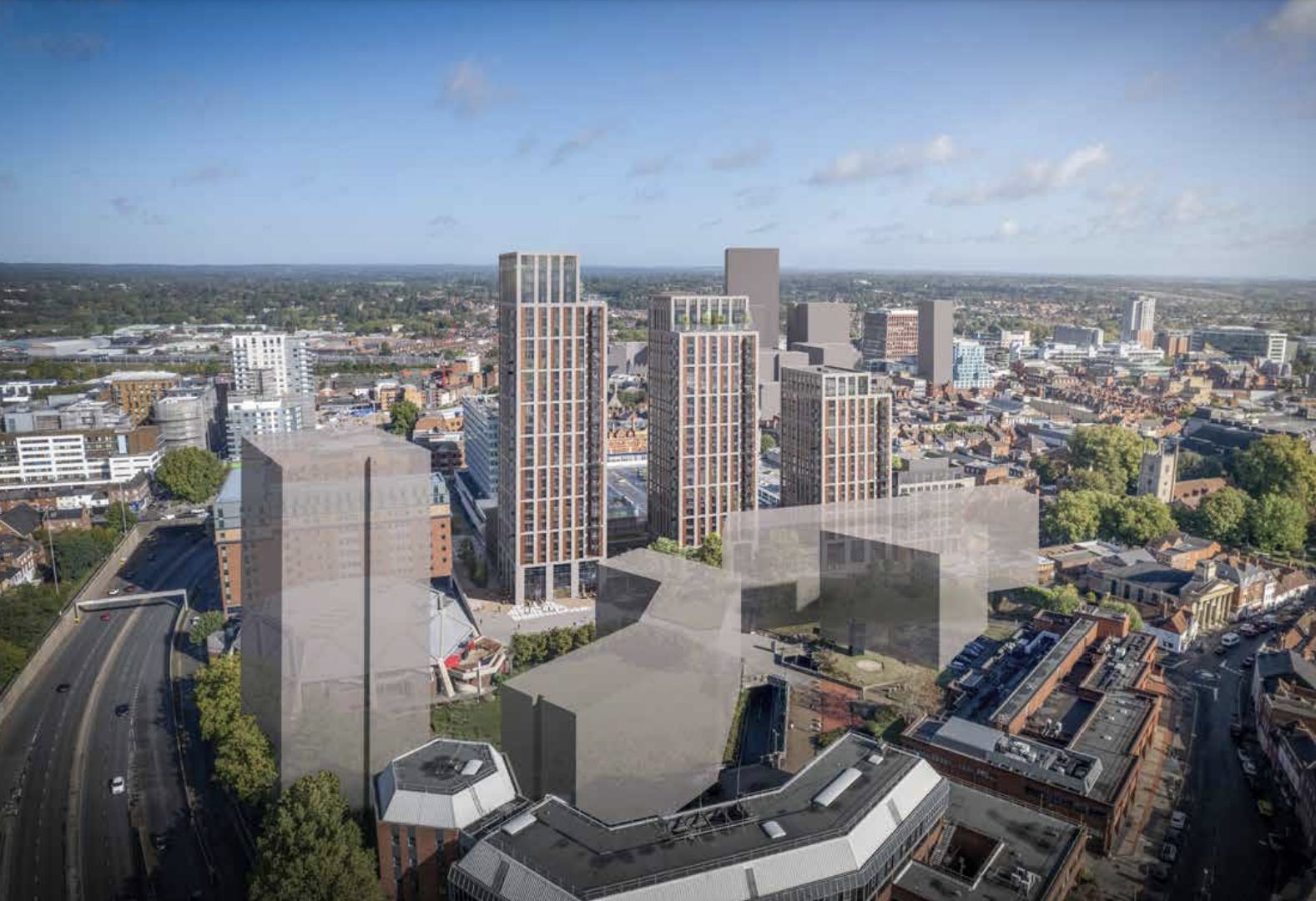
We have a critical few months coming up with two pivotal applications being decided. The Oracle’s plans for the ex-Debenham’s end are yet to be approved, likewise for the reinvention of the Broad Street Mall. The latter has been in various iterations of planning for over 5 years. The latest revision includes seven additional storeys to compensate for lost space needed for a second stairwell added for safety reasons. Worryingly, we have objections from the local MP, from the Baker Street Area Neighbourhood Association (BSANA), and from a heritage group. The latter is no surprise: only three things in life are guaranteed: death, taxes and a planning objection from the Reading Conservation Area Advisory Committee.
Some quotes from the CAAC objection:
- “the concrete car park façade… will be lost… This is the last of Reading’s three concrete car parks.”
- “[It will] entirely change the character and appearance of the mall and the wider Minster Quarter area”
- “[The development] does not respect the crossroads of Bridge St, Gun St, Castle St and St Mary’s Butts as the ancient Saxon centre of Reading”
In response I’d say on point one, I see some valid examples posted on local history Facebook groups of beautiful buildings sadly lost. But I see nobody sharing sepia montages of Yield Hall or the old Chatham Place car parks. So I’m not sure this is quite the extinction event up there with the Dodo. On point two, we’re crying out for a change in the “character and appearance” of the back of the mall and Minster Quarter Civic area. It’s been in decay for a generation. And the final point… a concrete wasteland and 1970s shopping centre carpark is respectful to the Saxons, but a rejuvenated residential district landscaped with active ground floor retail and leisure is not? Can we ask a Saxon?
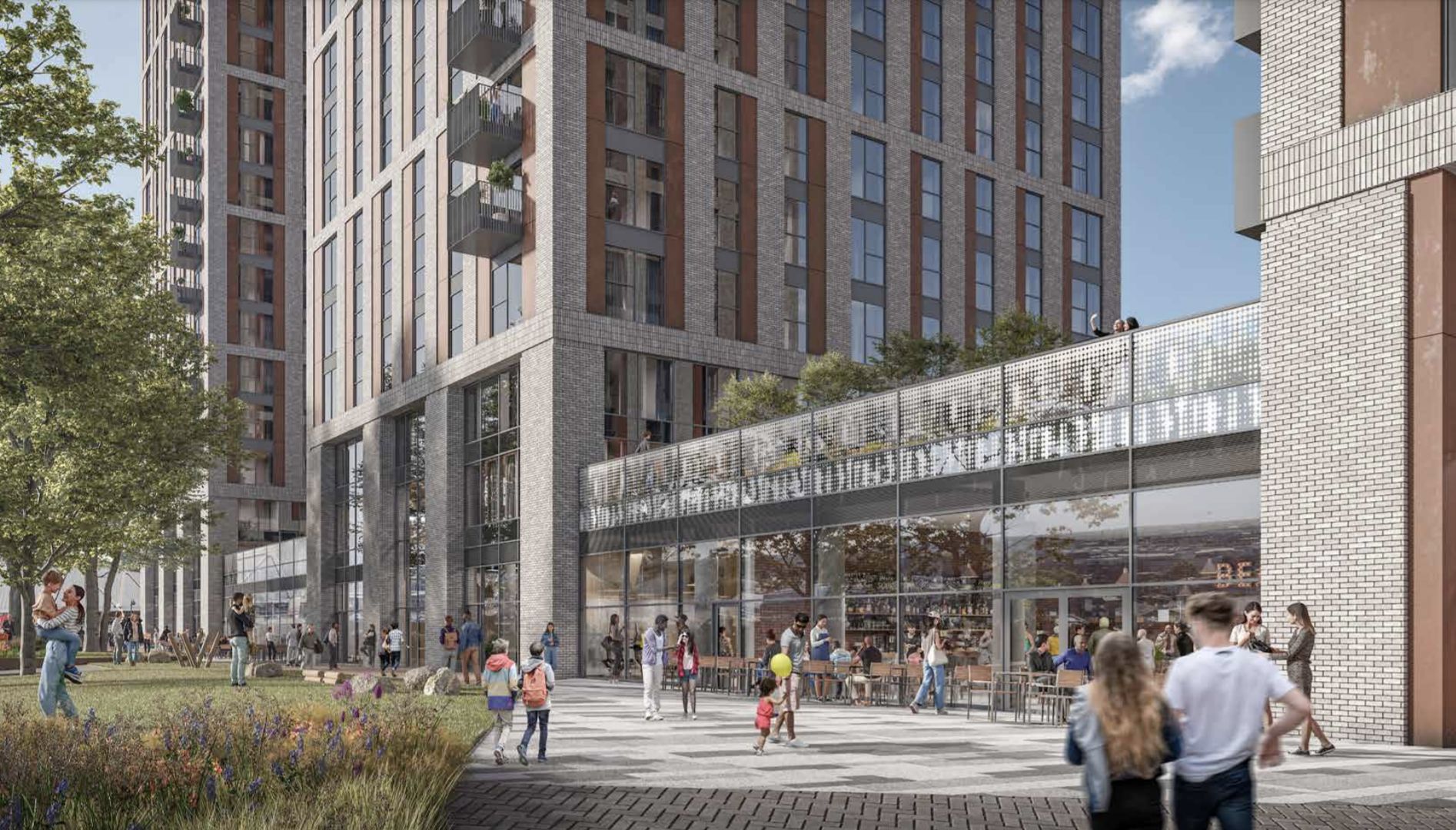
The BSANA objection is even more thorough. I really respect our fabulous local community groups and they are fully within their rights to stand up for the interests of their local area. They’re entitled to not like the design. But this is a 31-page highly researched objection, full of policy reference numbers, trying to snare a technicality that might allow the council grounds to reject. They might succeed.
The lawyerly defence states “a hoard of Saxon pennies dating to circa 875 AD was found in a coffin dated to the 9th century in the graveyard of Reading Minister”. Interesting though this is, the new flats will be quite a long way behind an observer stood in front Reading Minster musing its Saxon origins. Forget the challenges of the 2024, some of these objectors are struggling to come to terms with 1066. Or at least it’s an uphill battle. Ultimately, the Broad Street Mall is not in a conservation area for which the CAAC is there to advocate; it’s not in the Baker Street Area as defined by the Baker Street Area Neighbourhood association; and it’s a brownfield site with a similar existing planning consent in place. Surely we aren’t going to lose our nerve now and reject this opportunity?
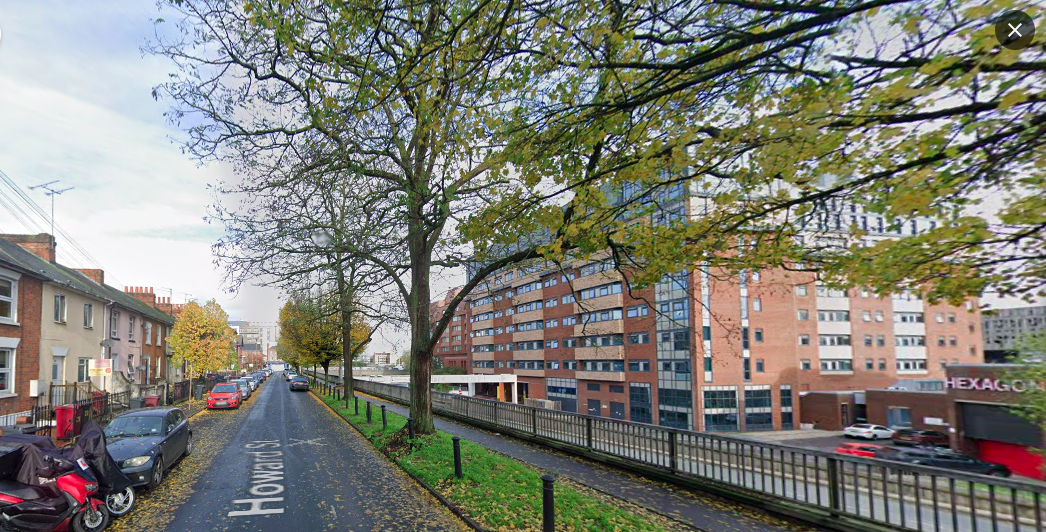
The BSANA report does make some fair points, around the affordable housing percentage for example. Hopefully that can still be haggled upwards. But it’s clear the 7 storey increase is their main issue. Yet, I’d point out that were the tower to be a lego brick, toppled over towards Howard Street, it would land somewhere on the IDR, a fair distance short of the trees lining the West Reading street. If those trees toppled over they’d crash into the houses. My trigonometry may be rusty, but I think that means you won’t be able to see the tower over the trees. You’d need to go back one block, with trees in leaf at least, and now you’re some 180 metres from the Broad Street Mall. That’s a huge distance away. I’d put it to BSANA, that practically, these new buildings will not really have as much impact as they perhaps fear. And to the CAAC, they do some great work in the conservation areas, but do they need to object to virtually everything outside of those areas?
The Oracle’s scheme is attracting similar feedback, if more tempered. But I fear the council will contrive to bring the two projects to the same committee, approve the Oracle and reject the Broad Street Mall whilst still being able to say they are supporting regeneration. We need both schemes, not one out of two. If you agree, please consider taking a moment to write a sentence to comment in support of the application on the council’s site here. It would be great if advocates of a vibrant and successful town centre could feature heavily in the feedback.
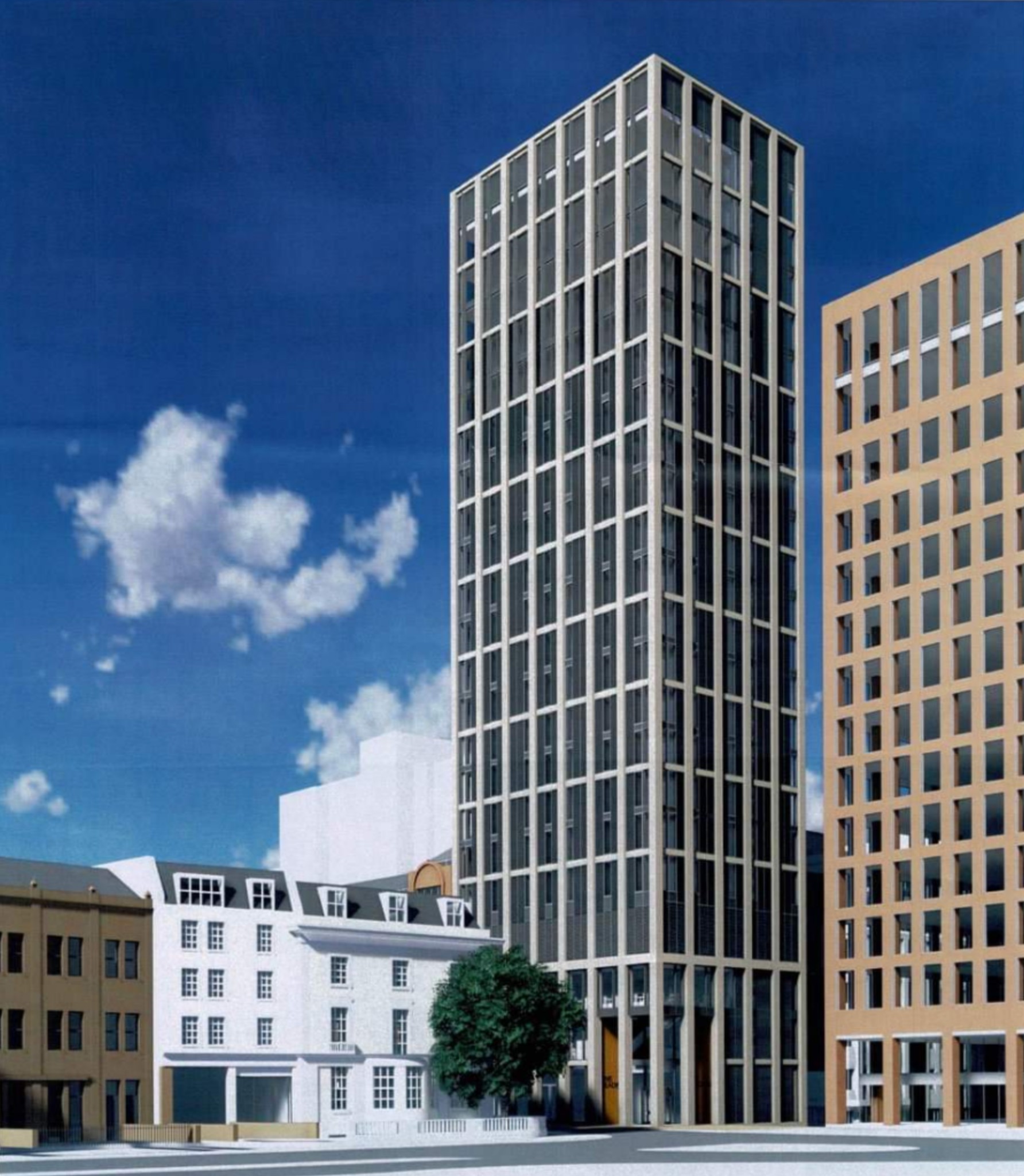
The project I get asked about the most is actually the one above, the corner of Station Road opposite Malmaison. It’s long had permission for a tall building – flats, but more recently a hotel/office hybrid scheme. The owner has kindly responded to my messages, explaining the challenges of bringing the hotel development forward. They said they’re working hard with the council on possible revisions to enable a viable scheme, adding “the council has been helpful but we have significant obstacles to overcome to achieve a scheme that is both buildable and commercially viable”. I’m guessing the additional stair core requirement is at play again, or maybe logistics around closing pavements / roads for the construction… But I really hope councillors can get involved to help find a creative way to remove the present eyesore of derelict offices and get something modern on that key focal corner plot.
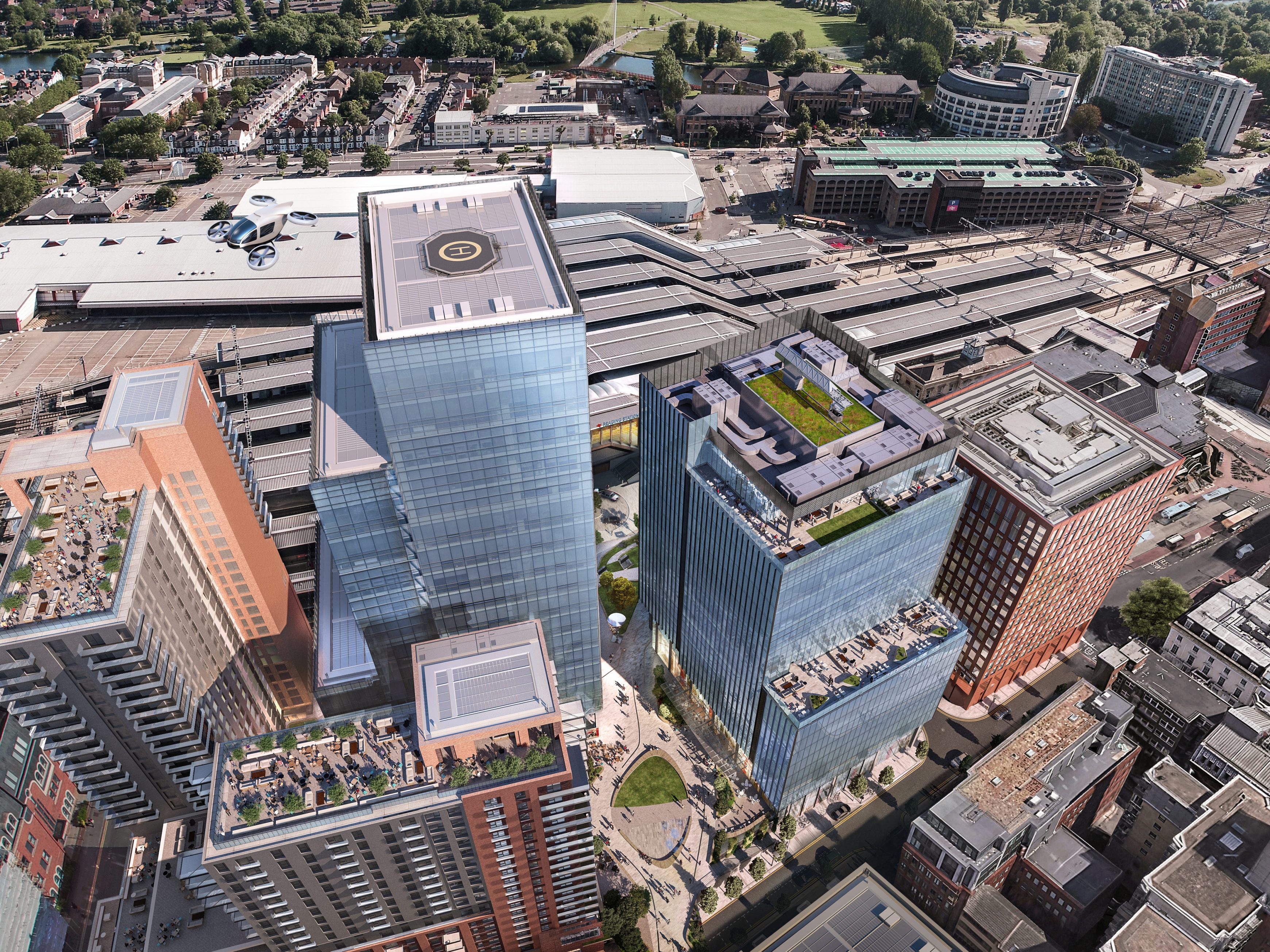
Elsewhere, it’s mostly apartments. The Vastern Road riverside scheme is beginning construction, the sorting office site has a potential build-to-rent operator lined up that might allow it to finally start work next year, Northgate House may get converted to flats, and although the One Station Hill office is successfully attracting tenants, the remaining cleared site will be used for car parking for a time while they assess options for its future. I would expect further apartments to feature heavily in these later phases of Station Hill, and doubtless we’ll all debate the relative merits of that!
*Regarding Eaton Court, having spoken with a councillor, it would be fair to point out that there were multiple issues with the scheme besides heritage concerns. Most notably, the design not sufficiently mitigating the noise impact from the Face Bar. In that sense, not only are councillors standing up for the quality of life of future residents on that site, but also for the venue, which might have faced challenges with complaints that could ultimately risk its operation.
As always, your views, whether you agree or disagree, always welcome…
 Reading-on-Thames
Reading council are fully aware that there’s a housing crisis. It’s incredibly daft of them to be so reluctant to push for more developments.
The Battle Street Scheme has sat idle for years with no progress whatsoever.
LikeLiked by 1 person
Thanks for taking the time to read and comment. I believe specifically the Battle St site has made its way through planning with quite a good community scheme.
LikeLike
The view from Baker Street/Jesse Terrace will be a bloody eyesore. But if they throw in a footbridge across the IDR on Baker Street or even better, pave over the IDR completely, then it’s a fair trade. Fingers crossed.
LikeLiked by 1 person
I particularly value your breakdown and analysis of proposals for Reading, always an insightful and well-written read. I am not sure I can add much to the conversation that hasn’t already been said and echoed across social media numerous times. As you point out the arguments against such developments are numerous but can be broadly broken down into aesthetic, overcrowding, and loss of identity/ character themes. I think there may also be an element of how quickly and how numerous these changes are occurring, or at least being proposed. I have only lived in the Reading area for a few years, but changes have been fairly rapid in that time and I can appreciate not everyone will welcome the pace of development. Out with the old and in with the new, can be quite unsettling.
You mention about the similarity of Victorian/ Edwardian terrace housing in Reading and how the copy and paste flat complexes could be seen with a similar eye. Whilst I don’t disagree, the terrace housing does hark back to a time when Reading had a clear identity and purpose, manufacturing and producing the 3 or 4 B’s depending on who you ask. I’m not sure the same could be said for the flat complex’s. It would be interesting to know what percentage of the occupants in the newer flat complexes, such as Huntly Warf work in Reading, or whether the ‘commuter town’ fears are really valid.
The arguments for these developments I feel tend to revolve around the notion that Reading should be thankful for regeneration/ redevelopment especially at a time when many towns and cities across the country are becoming more visibly destitute by the day. I have no facts or figures to support this, but Reading, at least in some areas and some demographics does seem to be bucking that trend, and these new developments whether you like them or not are a part of that. I like many others, however, would welcome a bit of variability and further reasons to draw visitors (and residents) into the town centre. If Reading truly wishes for city status, or if it just wishes to serve people in a manner which a urban centre traditionally does, then a focal point as a cultural/ entertainment/ retail hub should surely be sought in parallel with the much needed residential complexes?
LikeLiked by 1 person
Thank you. Yes, completely agree on leisure/culture. We can hope that the Gaol might yet have a role here.
Thanks again for sharing your thoughts.
LikeLike
We are losing our Town or lost it already.
its disgusting that all these flats are being built. We need an adequate hospital, surgeries, schools. Not more accommodation.
The roads can’t cope as it is, same old thing complete roadworks then dig it up again.
I want to move out of this so called town, it’s ruined.
LikeLiked by 1 person
Thanks for sharing. Sorry you feel that way.
LikeLike
Great article. Did I read somewhere as part of the Minster Quarter regeneration project to build a pedestrian/cycle bridge across the IDR connecting Baker St to Queens Walk?
LikeLike
thank you. I’m not sure on the status of that. I know the council retains aspirations of better links across the IDR.
LikeLiked by 1 person
I don’t object to more flats in principle if the economy supports them, but have a few reservations. Of these the last is the most serious to me:
1. The design and utility of some of the developments has been and will probably continue to be questionable. For example, the Weldale Street flats look pretty drab to me, and the proposed development of the post office site in Caversham Road, while looking a bit more interesting, seems to prioritise density over habitability, with poor light for some flats and little communal outdoor space.
2. They can be a blot on the landscape for some. I sympathise wholeheartedly with groups such as the Baker Street association in their objection to the tall towers on Broad Street Mall. 180 metres may seem to be a long way away, but a 90 metre building at that distance means nearly a third of the way up to the zenith – that’s a lot of lost light and privacy.
3. I don’t think an in-depth analysis has ever been done on the loss of amenity for existing residents beyond the appearance and obvious effects on light (and the likely lack of amenities for residents of the new developments). What are these developments displacing? For example, the development that isn’t mentioned is one of the most controversial – the retail park in Vastern Road. While I agree that the park consists of very low-quality buildings, it’s what it provides in a convenient location that matters, and the principle of convenient in-town shopping being pushed out to the margins. We already know that The Range has plans to move to an out of town retail park, and there is no space proposed for premises that Aldi would use. In the retail park’s place you get 1000 dwellings, mostly without car parking, and with the closure of Wilko and Clas Ohlson there really isn’t a substitute in the central area for The Range. Where would the new residents (mostly without cars) have to go to get a tap washer or a tin of paint? Another example is the likely development behind the Butler in Chatham Street. While a development of flats seems obvious, it is right next to a pub that represents one of a dwindling number of live music venues. Two of no doubt many examples where the knock-on effect of building flats would be to hollow out the town centre, increasingly making a mockery of the desirable concept of the 15-minute city by pushing valuable amenities further and further out. These losses are cumulative and it appears that they can’t be considered under the planning system.
LikeLiked by 1 person
Thanks for your thoughts.
I agree on your first point. On (2) maybe the reality might be somewhere between your view and mine from the article??
The third point is interesting. I don’t consider The Station shopping park as part of the town centre retail and leisure offer. That’s because I think most customers are driving there as a dedicated trip, and as such it may as well be out in an industrial area. I’d love a retailer like The Range to take the old Wilko site in the central shopping area. But single storey shed retail on the town centre periphery is just a misuse of land and a historical anomaly from when land was more plentiful and city centre living was at best unfashionable. I do appreciate some people locally may walk to those shed retail units, but I think they’re in the minority. If we can keep the core town centre shops all occupied there should still be a plentiful offer within walking distance for those residents you’re speaking up for.
LikeLike
Firstly, great article as usual.
I’m one of the local residents that walks to and utilises the station shopping park so loosing Aldi and the Range will be a shame. My question, is there anything preventing Aldi from retaining/ occupying a commercial ground floor unit of a development? Would the removal of a car park reduce shopper to an extent that this becomes unusable, or are rents too high?
It seems to me that having multiple units that will inevitably be filled and emptied on a regular basis, helps no-one. Would larger units, perhaps with a reduced rent to promote a basic utility, be more valuable to the local community whilst removing a potential blocker to new developments?
LikeLiked by 1 person
A supermarket is planned for the Forbury retail park redevelopment exactly as you describe, flats above it, basement parking to appeal to locals and those driving through. Who knows, Aldi might take it?
But I think non food shops like The Range will have to either move into the core town centre or retreat to out of town shed retail parks.
Thanks for sharing your thoughts!
LikeLike
Whilst it seems Reading has been incredibly fortunate in getting re-development proposals whilst other towns suffer from decline, in my view Reading Borough council could be far more bullish both on development in the face of a national and local housing crisis, and on public infrastructure renewal/development.
The IDR is a terrible scar on Reading – it’s noisy, ugly, and enforces car dependency in an urban hub. At the very least, it should have new foot/cycle links across it and ideally should be fully decked/destroyed entirely. It is also a complete mockery of both environmentalists and what should be an aspirational vision for Reading that the previous MRT plans were allowed to fall through – we should strive for a mass rapid transit solution for Reading as a matter of urgency. There is no reason that RBC shouldn’t be able to implement some form of value capture on new developments – supply of which doesn’t look to be drying up soon – to achieve such infrastructure improvements.
I sincerely hope that the new government’s desired plans to overhaul planning laws provide the tools necessary to quash the scourge of NIMBYism in Reading for good. The objections to new developments like Broad St Mall by orgs such as CAAC seem rather ridiculous at best and like a deliberate attempt at prolonging Reading’s housing crisis at worst, and those responsible would do well to find something better to do with their time.
In the near future, I hope RBC will spend less time blocking new developments and more time maximising the benefit of such sorely needed developments through public infrastructure improvement instead.
LikeLiked by 2 people
The problem with the MRT plan was it sat exactly where the Cemetery Junction bypass would be. No amount of public transport will alleviate the issue of thru traffic wanting to get off the A329(M) and travel to Oxfordshire. Motorists are left with driving up to Sonning or Henley to get there, or as what currently happens, they just go through Reading, which adds to the traffic carnage. They should focus on providing links from the A329(M)/A3290 north of the river into Oxfordshire, and the easiest way in terms of not involving Oxfordshire CC, would be to build the bridge over the canal and link up the A3290 with Napier Road. That should be the priority first, and then the council should look at providing better public transport. Public transport is useless for people travelling long distance and it won’t prevent any of the current congestion
LikeLiked by 1 person
To be fair, it’s not Reading Borough Council that is the problem here. It’s the National Planning Policy Framework, in particular section 16, protection of heritage assets. Paragraph 205 is the killer:
“When considering the impact of a proposed development on the significance of a designated heritage asset, great weight should be given to the asset’s conservation (and the more important the asset, the greater the weight should be). This is irrespective of whether any potential harm amounts to substantial harm, total loss or less than substantial harm to its significance.”
Having to place “great weight” on an asset’s conservation (and paragraph 200 makes it clear that this includes an asset’s “setting”) for even “less than substantial harm” (i.e. any harm) is a very high hurdle to clear. It effectively freezes out development near any listed property or scheduled monument.
LikeLiked by 1 person
I meant to say that paragraph 195 states that even sites of “local historic value” are regarded as heritage assets, placing a very low bar on what gets this very high level of protection!
If a council permits a development that could be argued to harm a heritage asset as per section 16, any tom dick or harry (but usually a self-organised campaign group) can bring a judicial review with a high chance of success due to numerous precedents, particularly “Barnwell” (East Northamptonshire District Council v Secretary of State for Communities and Local Government and Barnwell Manor Wind Energy Ltd [2014] EWCA Civ 137). You can read about Barnwell here.
LikeLiked by 1 person
thanks Dan. In this instance the planning department was happy to accept it, but councillors disagreed, and you’d expect the planners to be hotter on the national policies. It might go to appeal to get a further judgment. Although, as I said in the footnote to my article, councillors were keen to point out the Eaton Court scheme was rejected for multiple reasons.
LikeLike
Bit late with the comment, but I do think all of these apartments without car parking will help keep Reading town centre vibrant and busy. Reading was lucky with the Oracle, if it had been built out of town, the centre would have been decimated. As it is, Reading’s retail trade has suffered badly with the rise of online, Covid and with the opening of the Lexicon & Westgate.
I see basically no architectural merit to any of the towers, they’re almost entirely dull, boxy and ugly, however they’re generally replacing eyesores anyway (with the exception of the Oracle, that at least has some attempts at style), so it’s not like Reading would be much worse off.
With thousands more people living in the town centre, they will need lots more amenities within walking distance, reducing the incentive for retailers to decamp to cheaper out of town retail parks. As an example, if The Range goes, then all of these new residents will have nowhere convenient to get home items, with the departure of Homebase and Clas Ohlsen. Big incentive for a new operator to come in and grab that market, maybe an Ikea city centre store/Livat?
Multiply that effect across restaurants, service businesses, public services, etc and it demonstrates why in the long run this sort of higher density living will help Reading thrive.
LikeLiked by 1 person
I presume the Range will go. A new one is already taking shape at Rose Kiln Lane. So there’s a definite need in the town centre, as you say. Hopefully something will come in.
LikeLike
Looks like a good time for Robert Dyas to come back to the town centre – I think it was Clas Ohlson that originally killed their business; now they’ve got a golden opportunity.
LikeLiked by 1 person
[…] brought forward by developer Osborne for the redevelopment of a disused commercial building was rejected, partly on dubious heritage grounds. The 60 year-old company has now collapsed, although I’m unclear on the chronology – it […]
LikeLike
[…] Residential conversions of older office stock are continuing. The old Prudential (Huntley & Palmers) is underway, with the other old Prudential (the green glass building) heading the same way. Caversham Road also has one conversion scheme underway (40 Caversham Rd) with similar proposals for The Pinnacle further along held up in planning. The opposite side of the road is seeing the old Drews frontage preserved with new homes being built behind it, in a win for the planning committee. Yet they’ve had a loss along Oxford Road at Eaton Court with a naff office conversion now submitted after they turned down a reasonably tasteful new build. […]
LikeLike