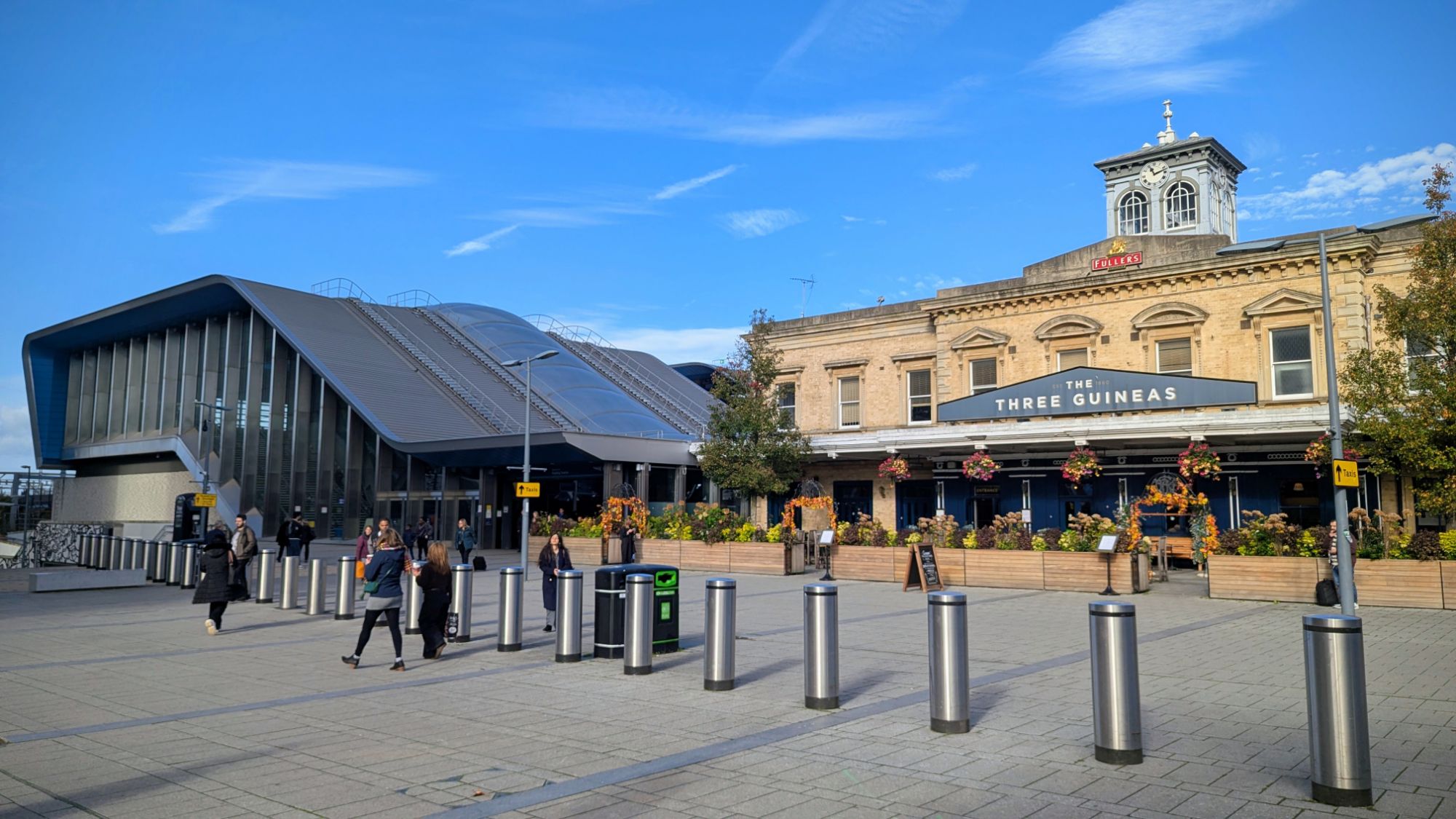
Reading’s economic fortunes are underpinned by its proximity to Heathrow. With a new runway set for take-off, there’s renewed interest in future rail connections to the airport. This is a long-running saga, with various rival schemes proposed that best suit various locations or interests. A firm proposal, to be funded by the airport as part of its expansion project, is apparently on its way, giving us a final opportunity to indulge in speculation. Will Reading finally get its long-awaited direct train, or will it be shunted into the sidings once again? Let’s look at our chances…
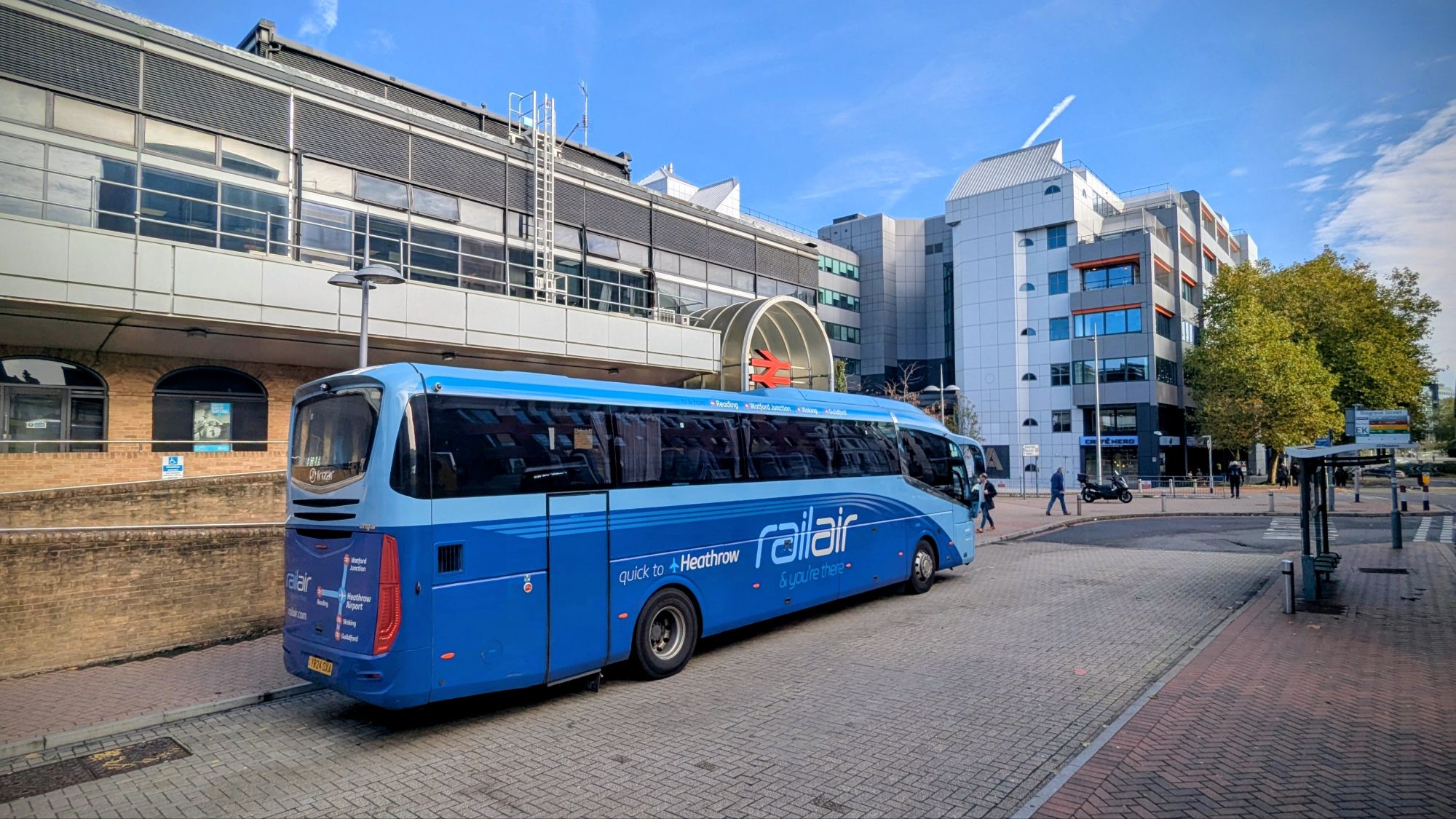
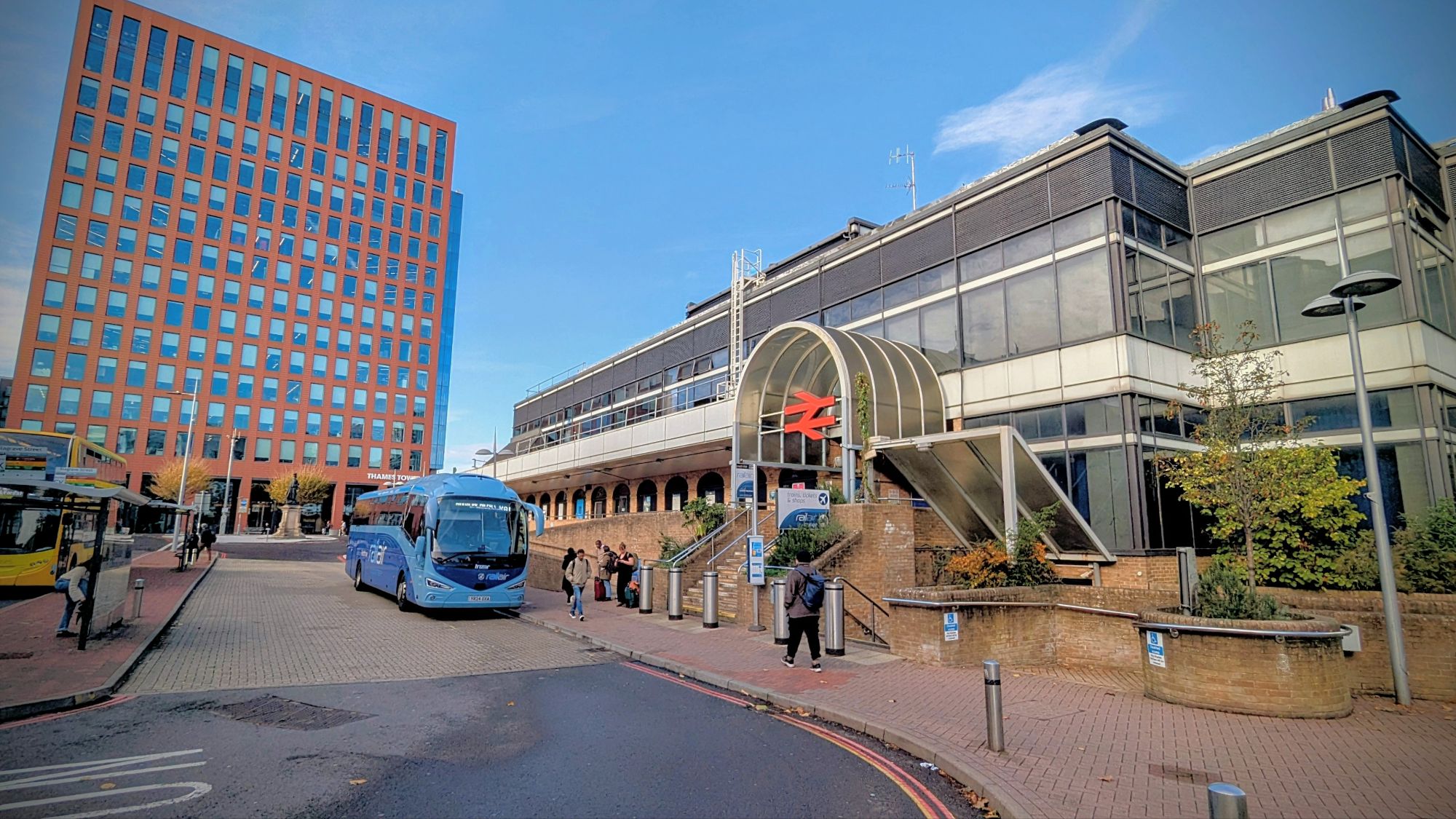
The existing coach service does a reasonable job, with three buses an hour for much of the day. Traffic conditions impact travel times but it’s fairly reliable at around one hour. Much faster journeys would be one upside of a rail link, and potentially more frequent services. The main benefit would be simply that far more people would use it. A train is just better than a bus. Even the bus service calls itself RailAir rather than BusAir. “From Reading to Heathrow we’ll get you there, Railair” went the old radio jingle. It’s telling how sheepish the marketing is that it’s actually a bus. The timetable webpage that Google took me to doesn’t let on either.
For those travelling from Oxford, the west of England, Wales etc, changing off a mainline train and lugging your bags out of the station to hang around on a scruffy pavement in the rain before a one-hour coach journey isn’t exactly an enticing proposition, leading to many choosing to drive. A rail connection within Reading station with a fast and frequent service would take a huge number of airport journeys off the road, which is exactly what an expanded Heathrow needs.
A rail link is not a new idea. A scheme was proposed in the early 2000s called AirTrack that would have seen Heathrow linked to Staines with the ability for trains to run east to London Waterloo and west towards Reading via Bracknell. AirTrack was stopped in its tracks for a number of reasons. Most notably extra trains on the Southwest network would have seen level crossings barricade the roads for longer periods causing traffic woes, especially around Egham and Wokingham. Also Reading needed additional platform capacity as this was prior to the big station rebuild.
Wokingham’s issues with level crossings do seem to have been mostly solved. They’ve built a new bypass over the railway line to the east called William Heelas Way ready for new residential development, and in the centre they’ve done some clever arrangements with the road layout to minimise the disruption caused when the gates close.
However, Egham remains a major bottleneck and Network Rail studies into rail links to Heathrow have concluded that it can cope with a maximum of four trains per hour in each direction at peak times, which it already has.
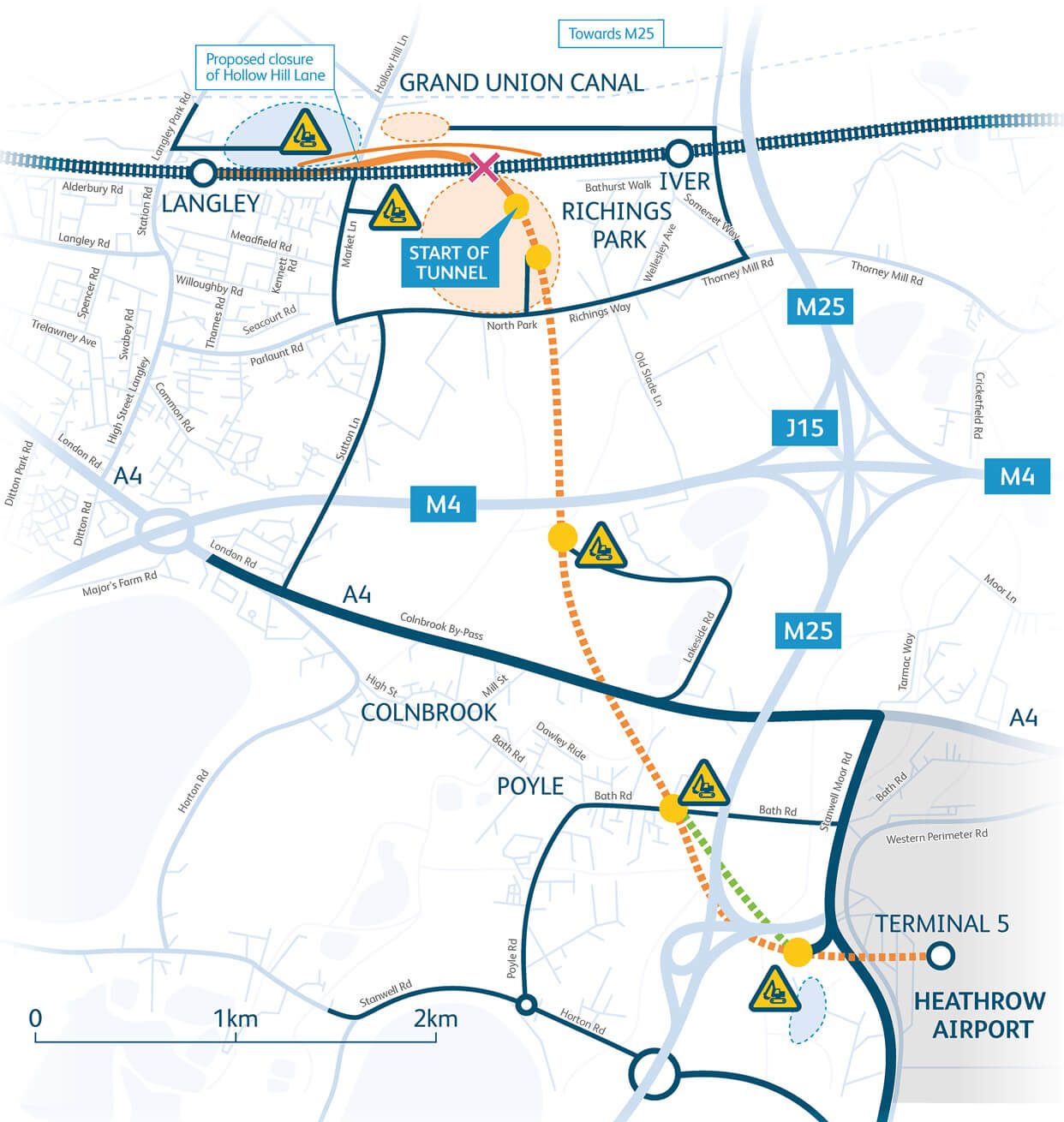
After AirTrack was shelved, attention reverted to the long-standing aim to connect Heathrow to the Great Western (Paddington to Reading) line instead. The specific proposal, from 2012, was for a 5km tunnel from Terminal 5 through to just east of Slough, and it made it quite a way through the planning process with detailed designs and consultations completed. However, various political shenanigans with Heathrow expansion caused the project to be shelved as the airport would only financially contribute if it could build its third runway.
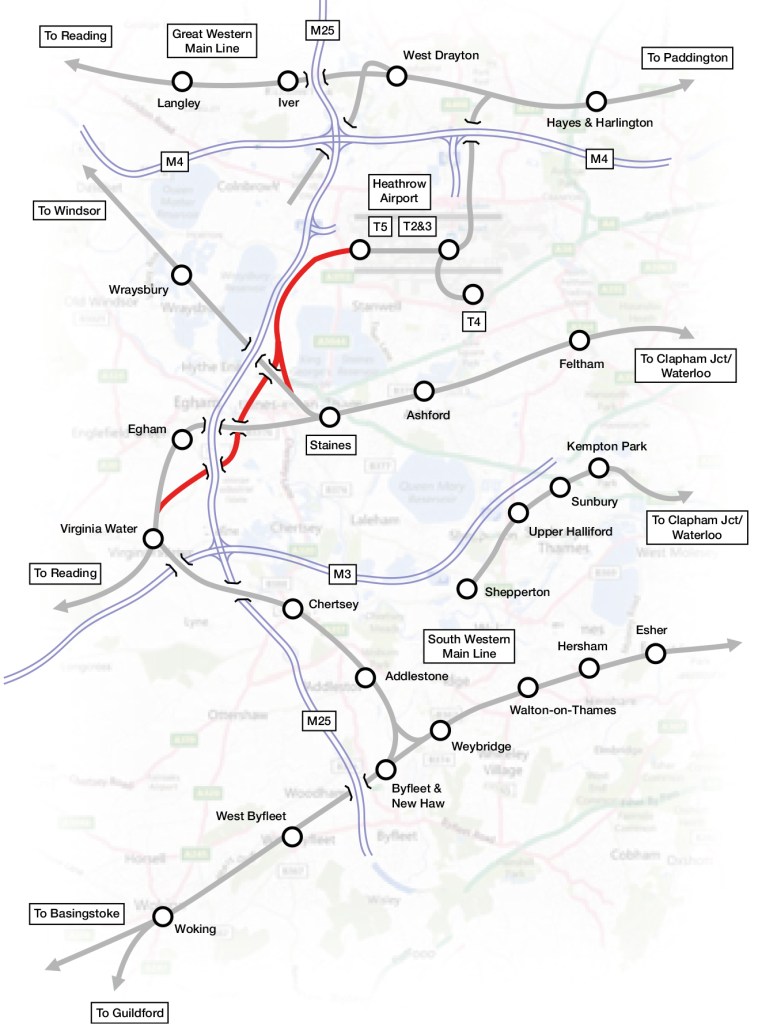
Subsequently, a version of the old AirTrack proposal to connect Heathrow to the Southwest rail network re-emerged as “Heathrow Southern Railway”. This time the Waterloo-bound branch retains the proposed route via Staines, but the south/west link involves a further tunnel around Egham to join the existing line near Virginia Water, avoiding all those pesky level crossings. This theoretically would allows trains to Reading, but their idea is to rely on the Great Western link happening in order to provide that, so the southern services would use the existing line through Chertsey to serve Woking, with alternating trains heading to Guildford and Basingstoke as their final destinations.
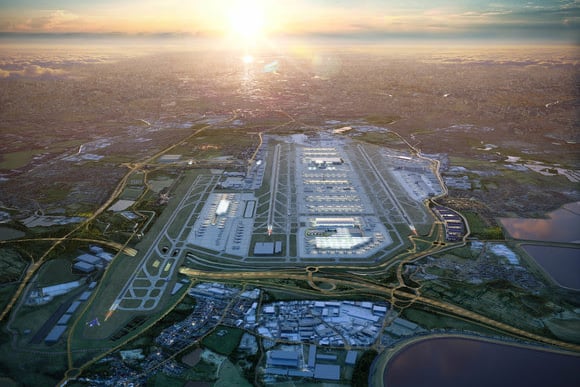
So to the present day and Heathrow’s new runway looks set to go ahead. It seems economic desperation has won out over lingering environmental concerns, and the political consensus has emerged that expansion is inevitable; an island nation needs its ports.
The government wants Heathrow to fund new rail links as part of the deal to secure the consent to expand. But that does leave the airport with a strong say as to which lines should be built. Recent documents from Heathrow offer some clues as to where their preferences may lie.
“Heathrow is exploring the option of promoting a new rail scheme that combines the objectives of a Western Rail Link to Heathrow and Southern Rail Access to Heathrow. A Western link would unlock access from the West of England and South Wales, while Southern Rail Access would facilitate rail connectivity from South London and the surrounding counties.”
Another source from the airport adds:
“We are looking at which combination of rail schemes would offer greatest benefits to both the airport and wider UK economy and noted that the biggest cost is tunnelling.
…local southern rail services to Waterloo would offer most value to the airport, followed by Western Rail, due to larger catchment and population density of potential users, it is currently unserved by direct transport links and has shorter length of tunnelling.”
My reading of this is that the Great Western link from Reading via Slough is part of the thinking, albeit second fiddle in the airport’s view to the link to Waterloo via Staines. The lack of explicit reference to Guildford/Basingstoke and the focus on the expense of tunnelling implies to me that the multi-billion pound extra tunnel around Egham needed for that option isn’t affordable. The Guildford/Basingstoke plan also needs other expensive interventions on the rail network to make it viable, such as additional platforms. The ambition, from those Hampshire/Surrey proponents, would be to run their Heathrow-bound trains onto Paddington, essentially replacing Heathrow Express. But that option will be unpopular with Network Rail, because it would mean the risk of importing any operational delays from the Southwest network onto the Great Western and vice versa – it’s much simpler if the two (very crowded) networks can be operated independently, with Heathrow just a connection point with separate platforms serving each side. It would also be unpopular with the airport: they’ve no interest in carting a load of Basingstoke commuters under their runways to Paddington each day, and they’d lose their prestigious Heathrow Express exclusive offering. So I think the tunnelling beyond Egham options, which were highly speculative anyway, will not feature in the final proposal.
I might be reading a lot into a few short statements but my interpretation might be shared by Woking’s MP who last week called for the government to provide cast iron guarantees that Woking would feature. No such guarantee was forthcoming. Reading’s MPs could do with reasserting their campaigns. After all, being the second priority of effectively three potential connections is a precarious position; note what happened with HS2 having to sequentially sever its limbs under cost pressures until only the stump of its London-Birmingham line remained.
Reading’s case, relative to Basingstoke, Woking and Guildford, writes itself. Reading has a much larger population, with a more significant commercial centre, and offers a route via Slough with its abundance of airport workers. Reading connects to far more destinations, offering double the frequency of onward rail services compared to those others, and the connections include larger and more populated geographies. The platform capacity is already sat idle waiting for it, and the Heathrow Express trains are even stored and maintained at the west Reading depot trundling back and forth daily. And there are no level crossings!
I hope we can have a little confidence that common sense with now prevail. Heathrow Express would be extended to Reading, albeit positioned as a separate service to avoid London commuters travelling via Heathrow (either accidentally or deliberately). That would provide four trains per hour, at a little over 25 minutes travel time. London Waterloo looks set to get its connection, with four trains per hour heading there as well. Transport for London is desperate to extend Crossrail T5 services through to a new Staines bay platform, so that will likely be included to provide further journey options and free up platform time at the airport. Woking may emerge empty-handed, unless we also demolish a car park at Staines to revert to the original AirTrack plan for trains via Egham – but those level crossing constraints would leave Weybridge and Woking to fight it out for a half-hourly airport service. Proposals are due to be revealed in the coming months, so let’s see if I’m right…
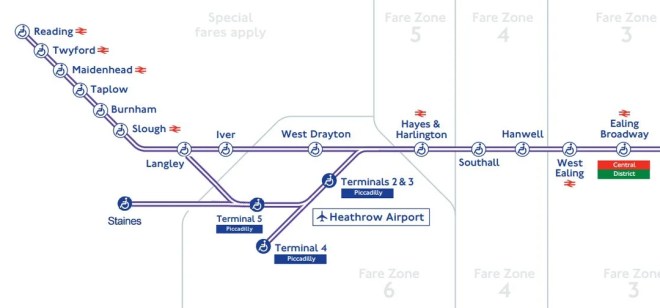
An expanded Heathrow could be the gateway to further economic development for the country, and for Reading in particular if it can secure a fast direct rail link. There’s a glimmer of hope that it might be set for take off this time.
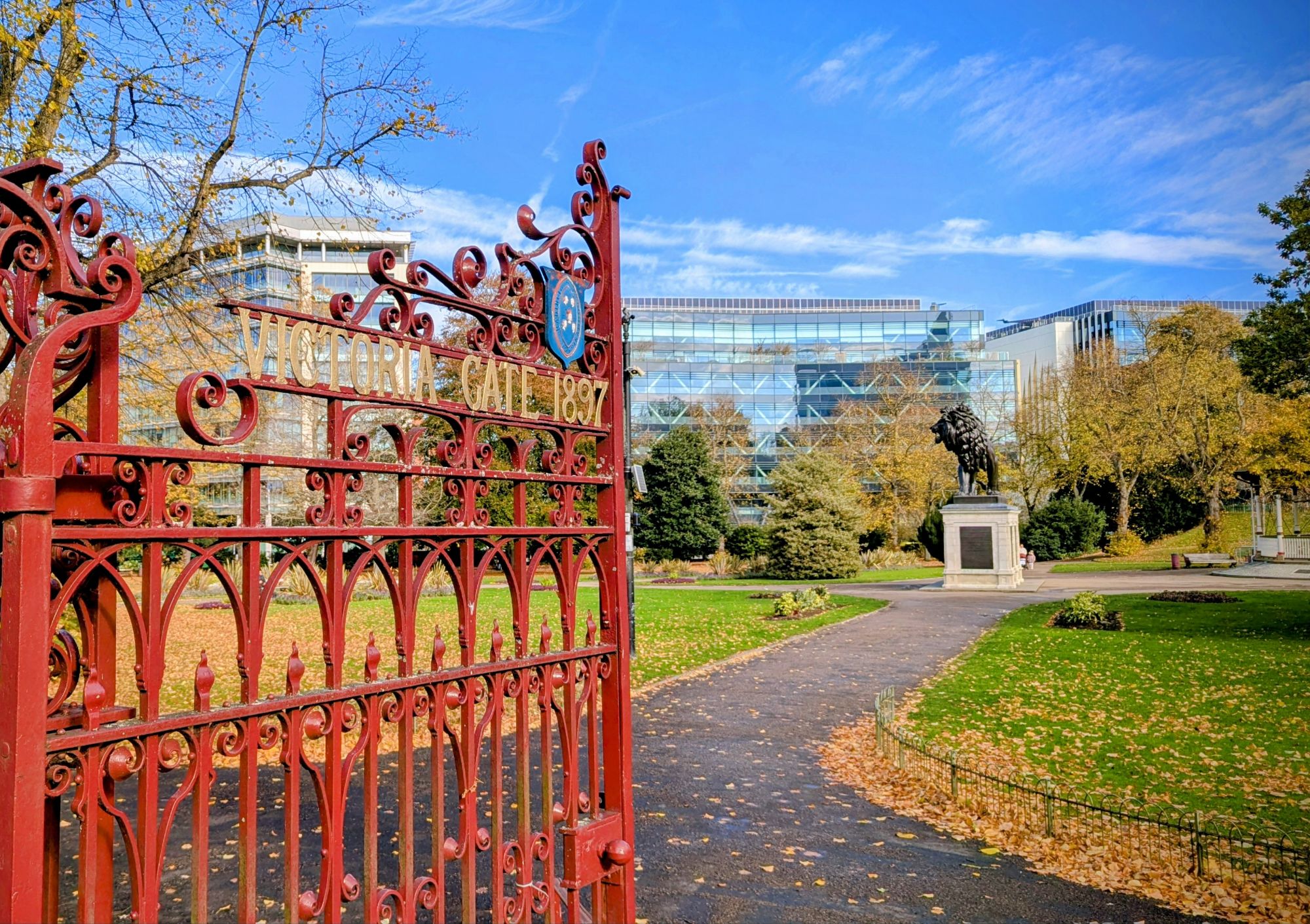
Separately, the ongoing Station Hill project is holding a public exhibition on its next phase of development. Friday 7th November and Saturday 8th November, 10am till 4pm each day, in the reception of the new One Station Hill office tower. Or check out my site next week for a review of the latest plans.
 Reading-on-Thames
I’ve never understood why they don’t add additional curves at airport junction on the GWML to allow access to and from the west. Is that connection into Heathrow already at capacity?
LikeLiked by 1 person
Maybe if they’d designed it from the start. But there’s no space for all the various point junctions in the short above-ground section, so you need to spur off the tunneled section. I.e. dig a tunnel, by which point you’d may as well tunnel the optimum line out to Langley
LikeLiked by 1 person
thanks – makes sense though how shortsighted that original design was!
LikeLiked by 1 person
I wonder whether any of the old Staines and West Drayton line could be utilised/ reinstated. If there are indeed plans to re-route the M25, then this could be a possibility?
https://en.wikipedia.org/wiki/Staines_and_West_Drayton_Railway
LikeLiked by 1 person
I see this was actually part of the original Airtrack proposal referred to in your blog above.
LikeLike
The AirTrack plan involved reinstating a western chord at Staines so that trains can run from Egham onto the Windsor branch (before splitting to Heathrow)
LikeLike